
Leavitt Peak 11,572′, Latopie Peak 11,268′ and Margaret Lewis Peak 11,052′
Sierra Nevada
Total Time: 6:30
Distance: 8.5 miles
Elevation Gain: 3,300′
Crux: Class 3
Trailhead: Sonora Pass, no services


The spring of 2026 had some unusual weather for the Sierra Nevada. After unseasonably hot weather in March, I had expected a very early start to my alpine season. But a series of late April storms lined up perfectly with my days off, and it wasn’t until mid May that I had the opportunity to break over 10,000′ for the first time all year. Not well acclimated, I decided to head to Sonora Pass to tag Leavitt Peak, my first objective off Highway 108 since Black Hawk Mountain more than five years earlier. Leavitt was one of only a handful of Sierra peaks where I still had unfinished business. I had attempted it in 2014 after climbing Stanislaus Peak that morning, but was pinned down just a few miles from the summit by some of the worst hail, thunder, and lightning I’ve experienced in the backcountry.
Although there was no rain in the forecast this time around it would be a cold one, with some serious winds up along the crest. I woke up well before dawn and headed north, reaching Sonora Pass shortly after sunrise with the pines rocking from the high gusts. My car read 20 degrees outside with a forecasted high just above 40. I had brought my skis with hopes of doing a ski descent of one of the handful of lines in the area, but between the bitter cold and wind icing everything over and not wanting anything high profile hanging off my back on the windy ridgeline, I left them in the car and started out on foot. There was no remaining snow at the level of the pass and along the ridgeline, but there was still decent coverage along the north facing aspects.


The wind was coming hard from the east with gusts well over 50 mph on the crest, and I stopped briefly to put on crampons in an attempt to drop onto the leeward western slopes. There were a number of subpeaks along the ridgeline to the summit of Leavitt Peak, and I intended to tag them on the way out in hopes the winds would die down a bit on my return. As I worked around the west side of Margaret Lewis Peak, I had my first look at Leavitt Peak, the north face featuring a steep Y-couloir that supposedly made for good ski descent- not in the cards today.

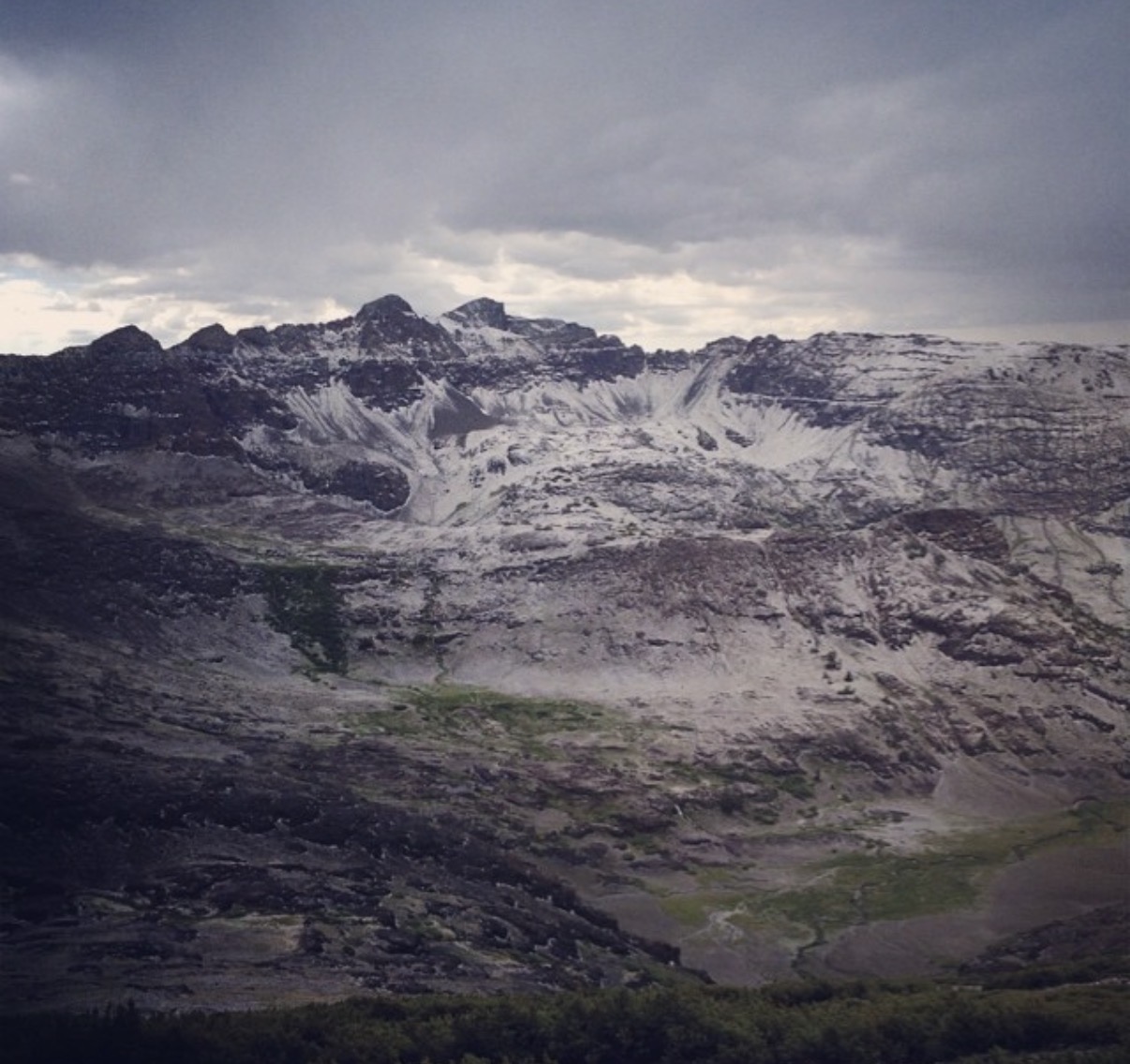
I worked around the unnamed Peak 11,255′ before reaching the saddle with Latopie Peak. Although going up and over looked more direct, the ridgeline looked very chossy, so I followed the normal route into the snowy basin to the east. I realized this was the basin where I had been pinned down in the storm, taking cover in a pathetic stand of small pines downslope of the PCT. I snapped a picture and continued on, ascending a snow ramp to a break in Latopie Peak’s east ridge to access the basin above Latopie Lake and eastern ridge of Leavitt Peak.


There was little snow on the trail on the south facing aspect, and I followed it into the basin before taking a direct line up the snow towards the summit. Unfortunately on the ridgeline, the wind became some of the worst of the day, I needed to fight just to stay upright at times. I was hoping to find a wind break at the summit but found little relief, hunkering down next to a small rock pile for a small snack while trying to keep warm. Despite the cold and wind, it felt satisfying to finally stand on a summit that had turned me back more than a decade earlier. The summit was so broad it was hard to take a good picture in any direction, although you could easily pick out Mokelumne Peak, Round Top and Highland to the north, Tower Peak to the south, and Mount Ritter, Banner and Lyell in the distance.


I didn’t bother signing into the register, knowing it was likely mostly full on such a popular peak and not finding it worth it for my hands to go numb trying to sign in. I dropped back off the ridge as quickly as I could back into the basin below where I found some shelter from the wind to remove my crampons. From above, I could see that the connecting ridgeline up and over Latopie Peak likely went and was snow free. Although I wasn’t moving particularly fast between the high winds sapping my energy and a general lack of acclimatization, I decided to tag the remaining summits on the ridge back to the car.

Although there were a few crumbly gendarmes on Latopie’s southwest ridge, they were easy to avoid up until the final summit cliff bands. Although it looked like I could find a line wide to the right, I decided to explore a weakness on the west face, moving up into a chossy bowl. On the far southwest corner of this bowl was a short class 3 step that would put me on the summit. I scrambled up it cautiously not trusting the crumbly volcanic rock (although nothing broke) and topped out shortly after 11 AM.


The views were best towards Leavitt Peak, the crumbly connecting ridgeline of dark rock providing nice contrast to the snow slopes on either side. I dropped back down the same class 3 step and side-hilled across scree to Latopie Peak’s north ridge back down to the saddle and PCT. The winds were beginning to settle so I pressed on and upwards, aiming for the unnamed summit of 11,255′. This has a few low cliff bands that were easy to work around, although I was quickly growing tired, taking about an hour to cover the distance between the two subpeaks.


Continuing north, the final summit was the lowest- Margaret Lewis Peak. This one was also the easiest, taking under 30 minutes to reach from the unnamed summit to the south. I took a few final photos before dropping off, trying to take a direct line towards my car parked at Sonora Pass below.


The snow was finally beginning to soften, and with steps kicked in the snow from other skiers there was no need to put my crampons back on for the final stretch. It was 1:30 PM when I made it back to the car, a bit slower than I had hoped, but respectable given the conditions and my lack of acclimatization. Although the conditions were harsher than expected and I never got to use the skis, it was a satisfying start to the alpine season. After years of unfinished business and a weather-forced retreat in 2014, finally tagging Leavitt Peak made the cold and wind worthwhile.
