
Third Pillar of Dana 11,460′- Regular Route
Rock Climbing– Sierra Nevada
Total Time: 10:10
Distance: 6.9 miles
Elevation Gain: 2650′
Crux: Class 5.10b
Pitches: 5
Protection: Double rack down to #0 Z4, many alpine slings, 60 meter rope
Partners: Jesse Gandt
Trailhead: Tioga Lake Overlook- pit toilets


As summer began winding down, I was itching for one last big technical alpine climb of the season. Jesse and I had lined up a day on the Sierra Eastside, and I suggested the Third Pillar of Mount Dana, an ultra-classic five-pitch climb up a striking granite prow just outside Yosemite National Park. With multiple pitches of trad climbing up to 5.10a/b, it would be near the limits of both of us.
Jesse was initially unsure, particularly with one of the crux pitches known for difficult protection. I was able to get him to bite by offering to lead pitches two and four, two of the 5.10 pitches, while letting him lead the final glory pitch to the summit. Although the route was only five pitches, the several-hour approach meant we gave ourselves plenty of time, meeting at the Tioga Lake Overlook just before 7 AM. After packing an excessive number of cams, ranging from microcams up to a #4, we started out.
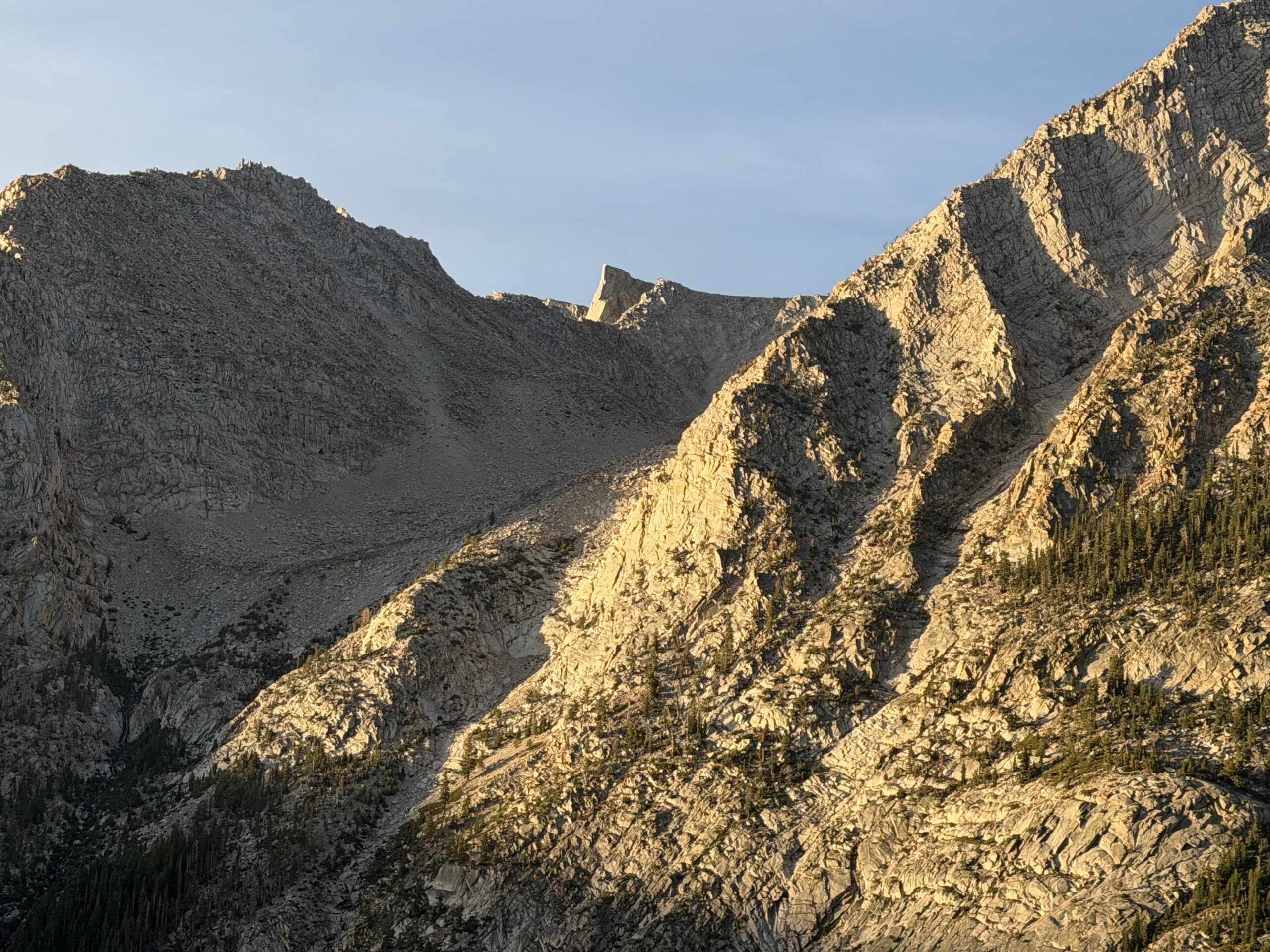
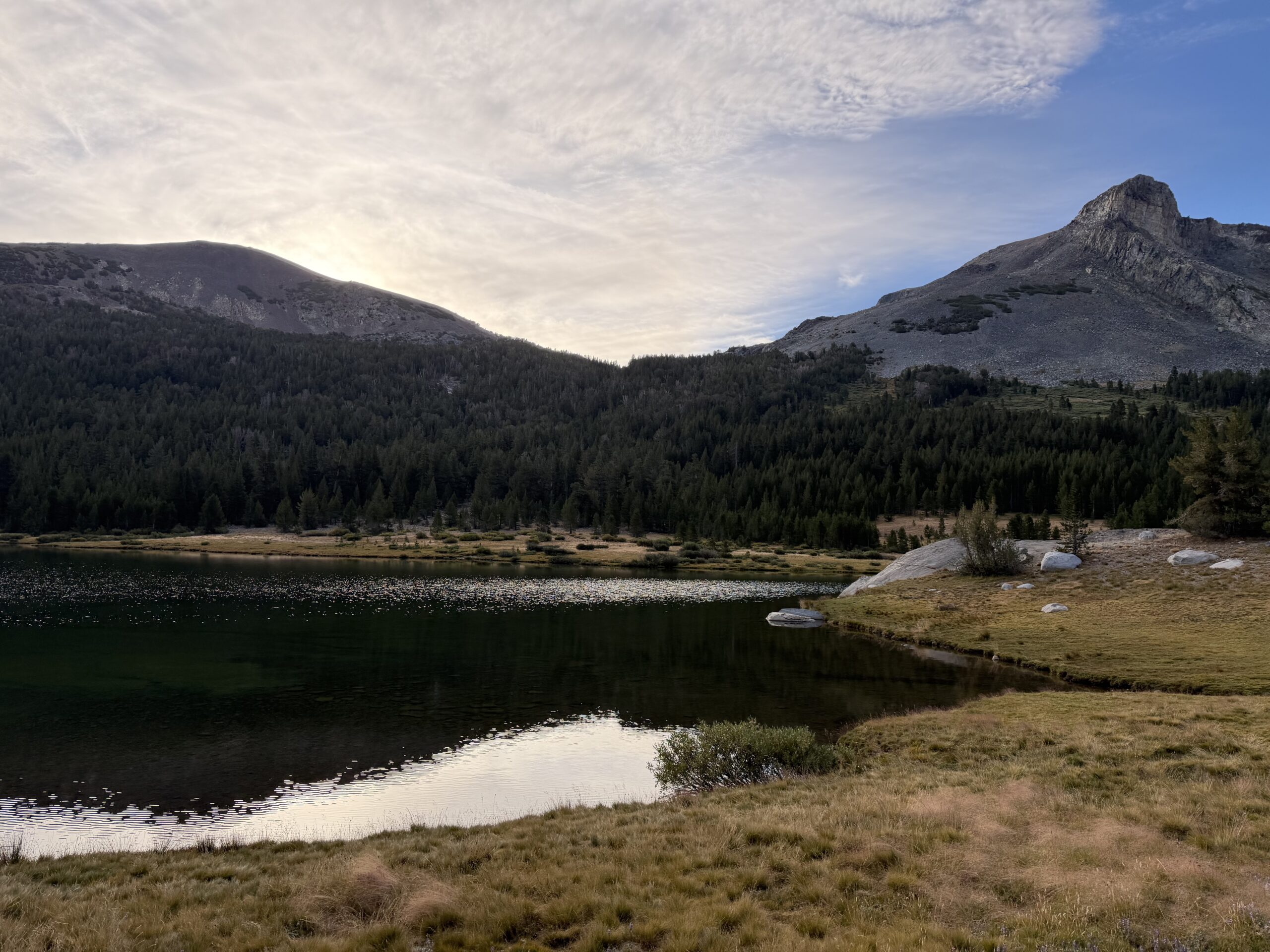
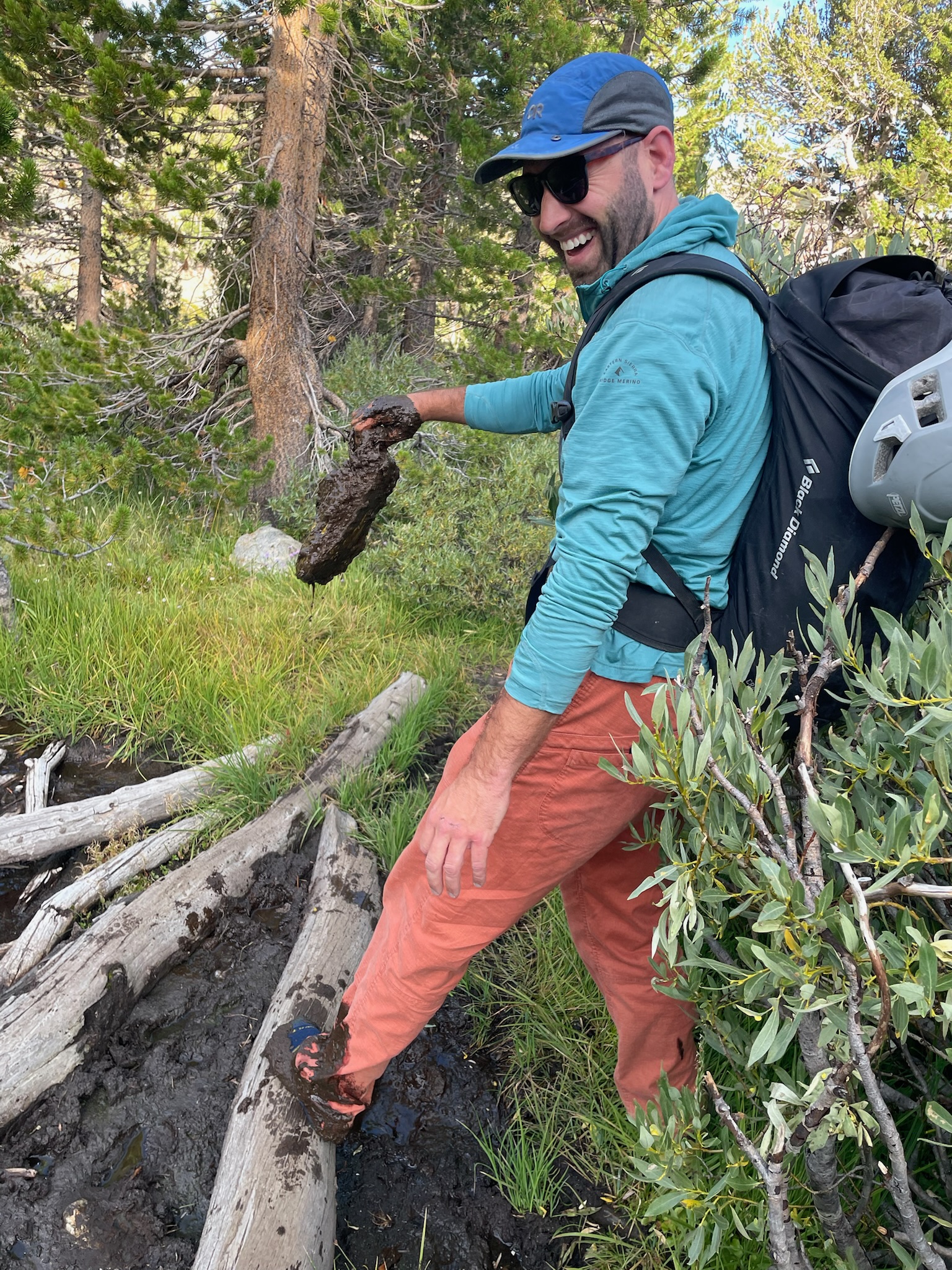
The approach trail briefly dropped to cross the lake inlet, then steeply followed the stream running down Glacier Canyon from Dana Lake. Jesse and I caught up as we hiked, with our last climb together being Yosemite’s Absolutely Free, 5.9, in the spring. As we neared treeline, the use trail entered a muddy meadow with a few short log crossings. I didn’t break stride as I started across, the log quite large and appearing sturdy. But there was a thin sheen of mud, and my left foot slid off directly into deep muck halfway up my shin.
When I pulled my foot out, the suction of the muck kept my approach shoe in place. I crouched down, blindly plunging my arm into the mud and feeling around for the shoe, eventually pulling it out weighing about five times more, completely saturated and filled with thick brown mud.
“Well, I hope this is my only fall for the day!” I joked. We laughed as I rinsed off my shoe and leg in the nearby stream.
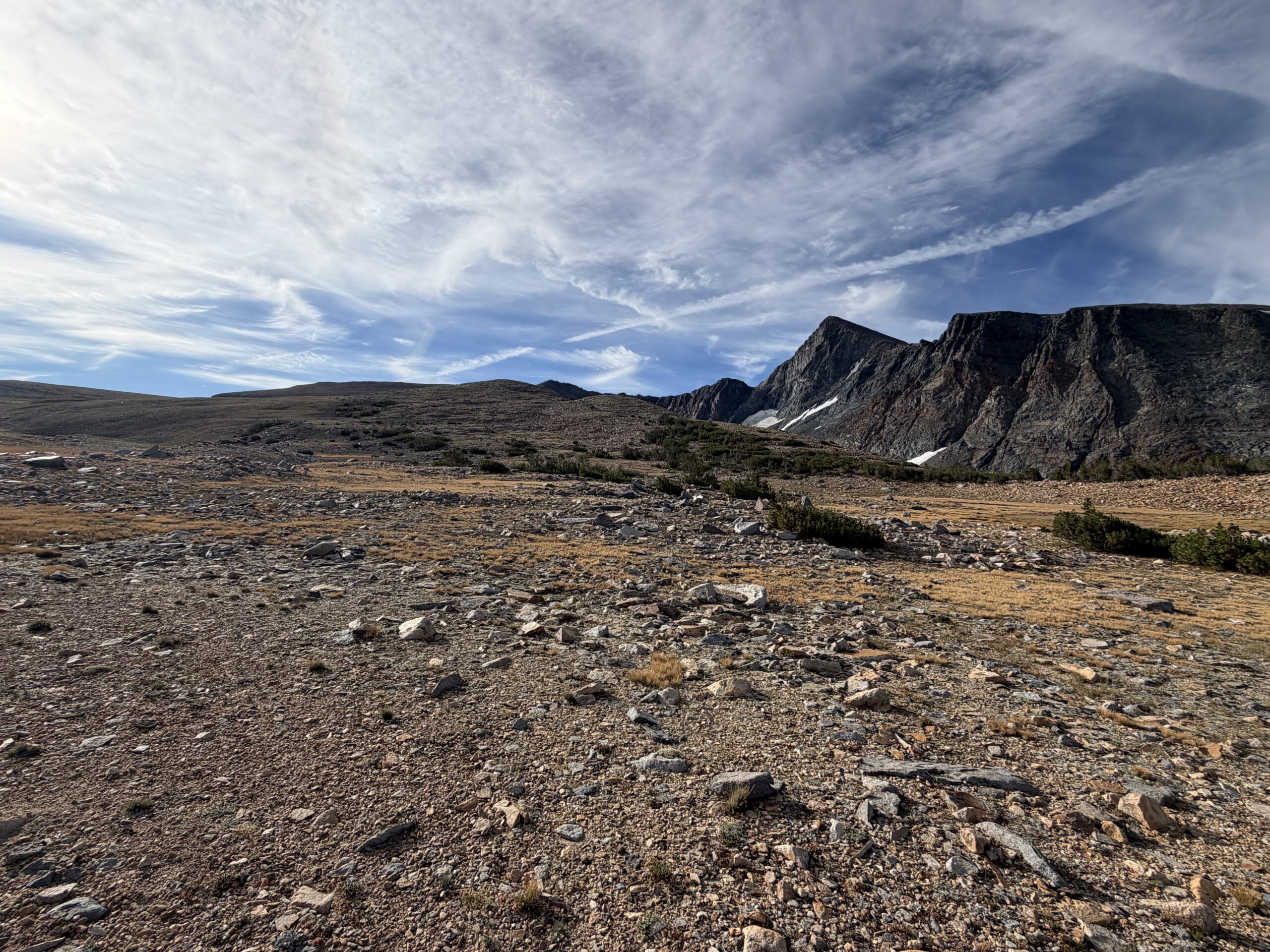
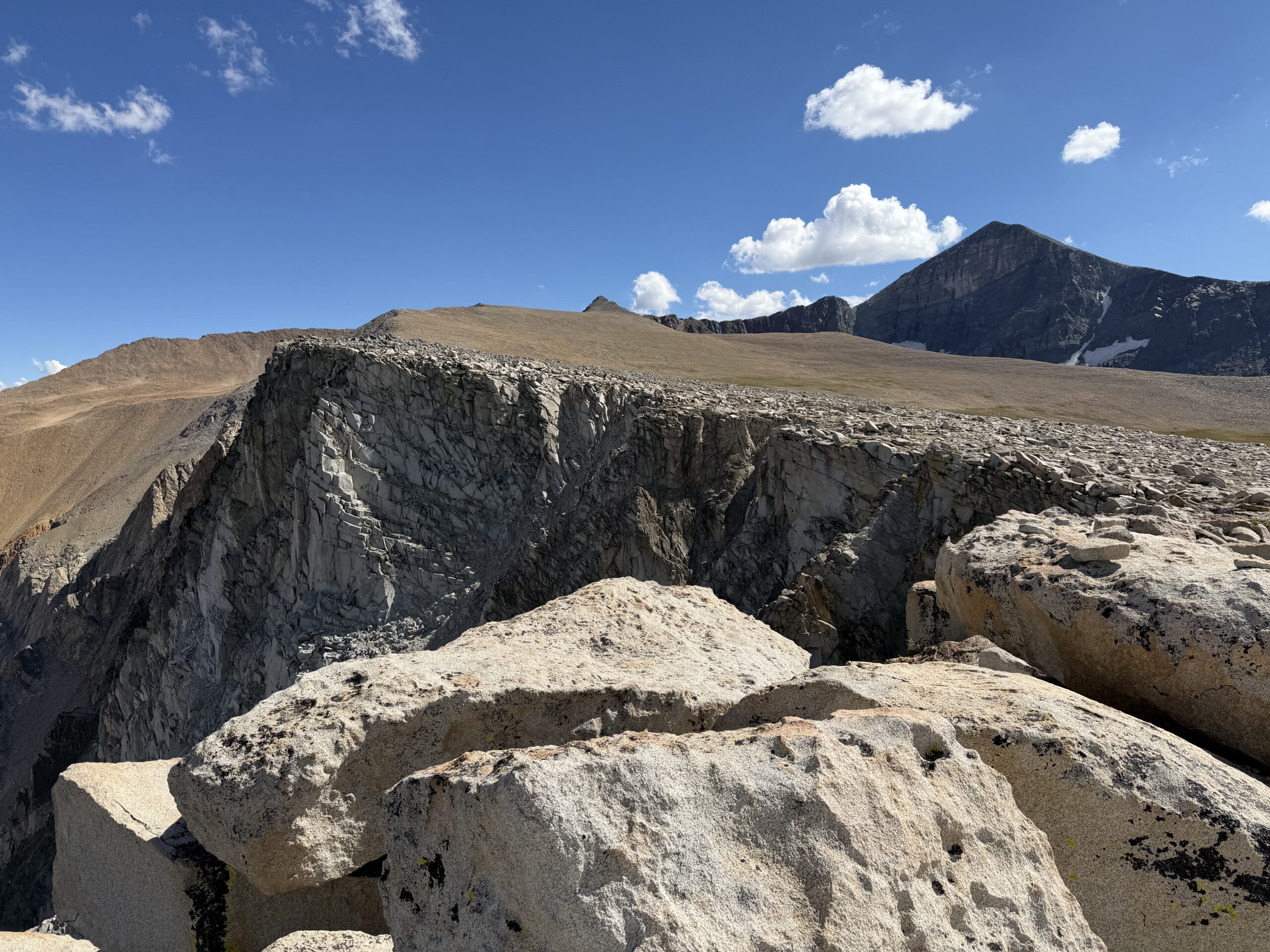
Not far above the meadow, the use trail cut north away from the stream toward the rim of Dana Plateau. We briefly lost the trail, but the cross-country travel was simple, with thin grass, solid talus, and packed dirt. We aimed for the summit of the Third Pillar, with the approach requiring a descent off the Dana Plateau to the west to reach the base of the pillar.
We found the ridgeline off the rim west of the summit and stopped to put on our harnesses and climbing shoes. I was happy to take off my still-wet shoe and sock, placing them on a large boulder to dry in the sun while we climbed. With small packs carrying only water and snacks, we started down the ridgeline toward the base of the climb.
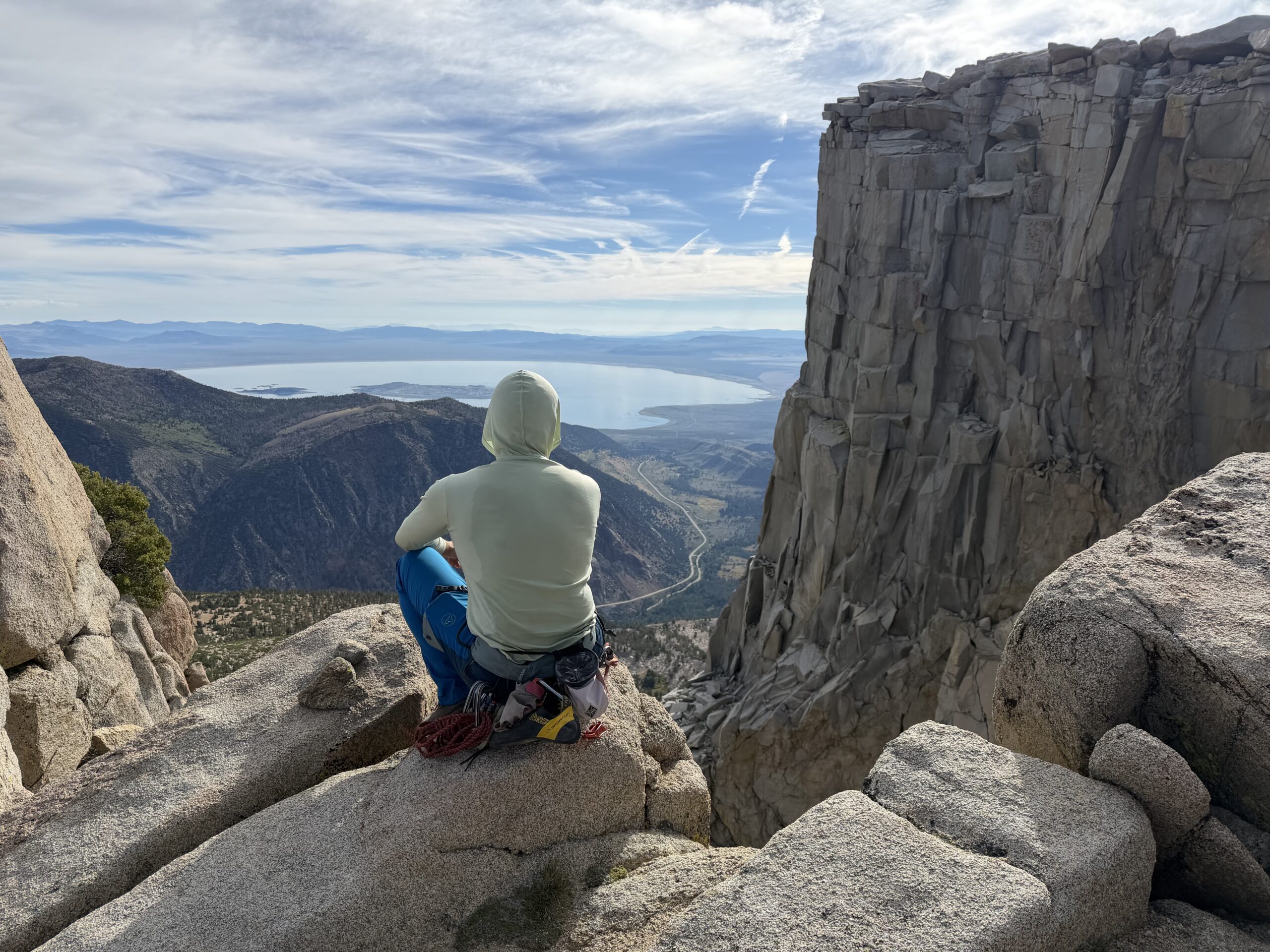
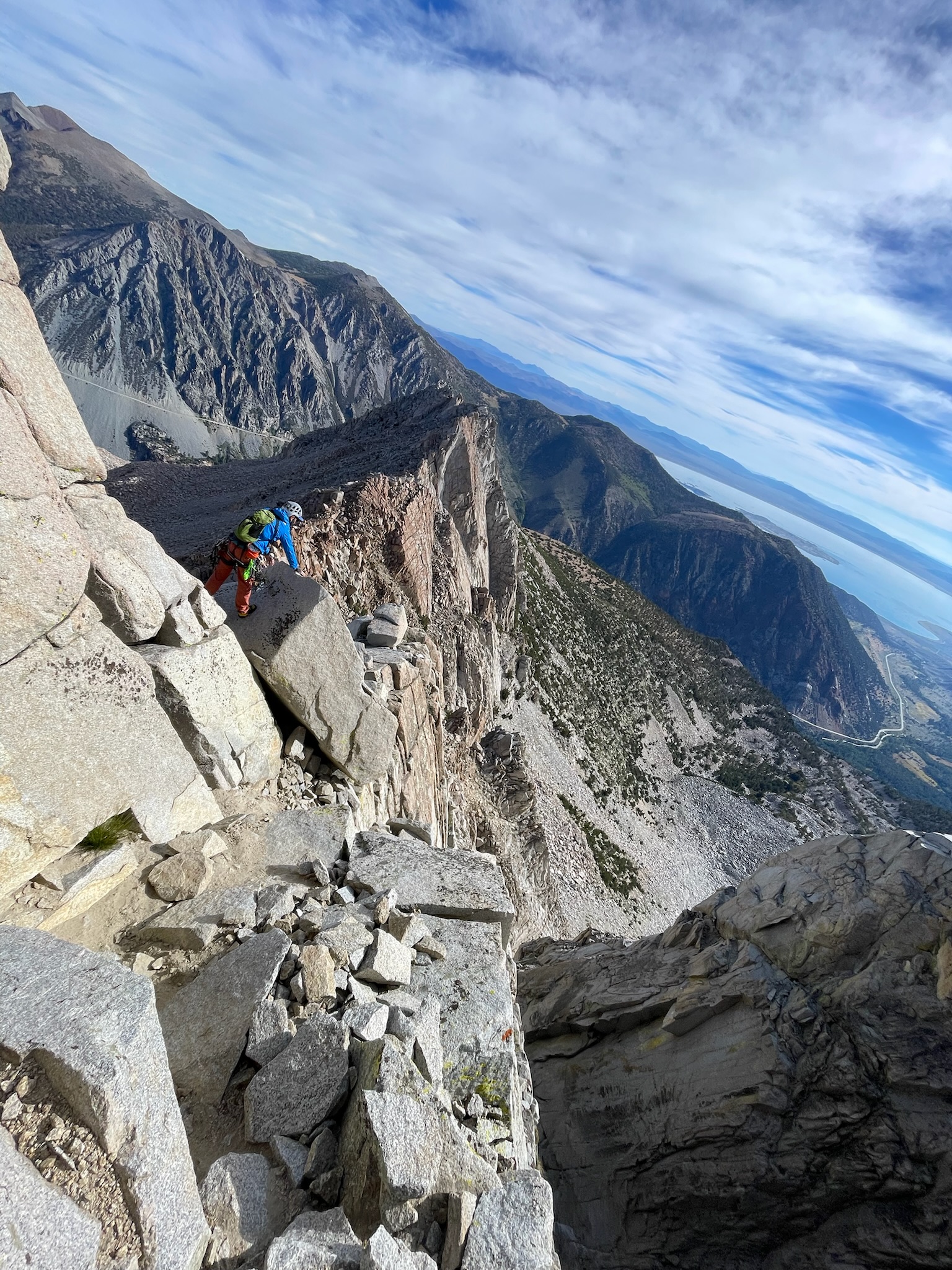
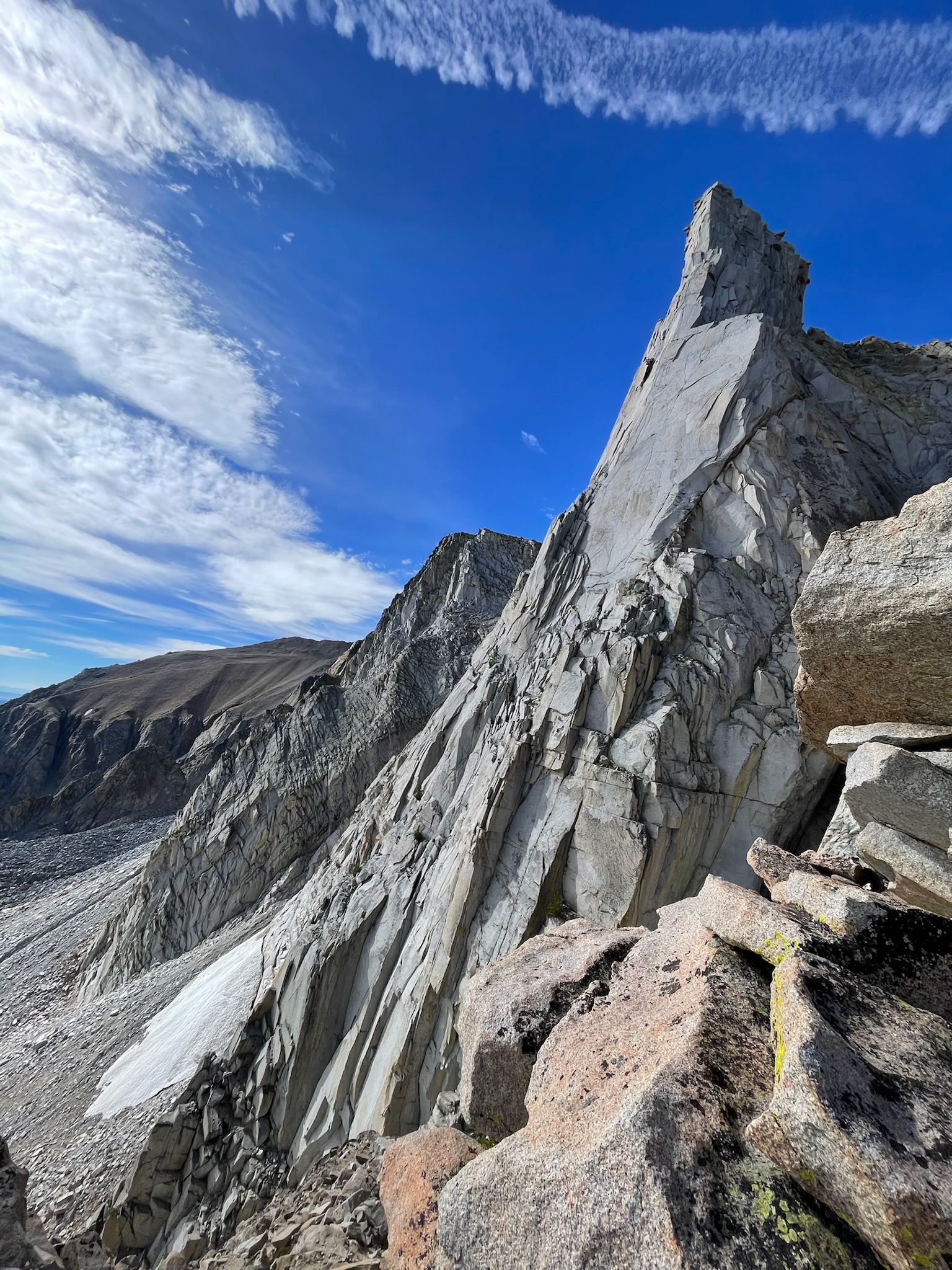
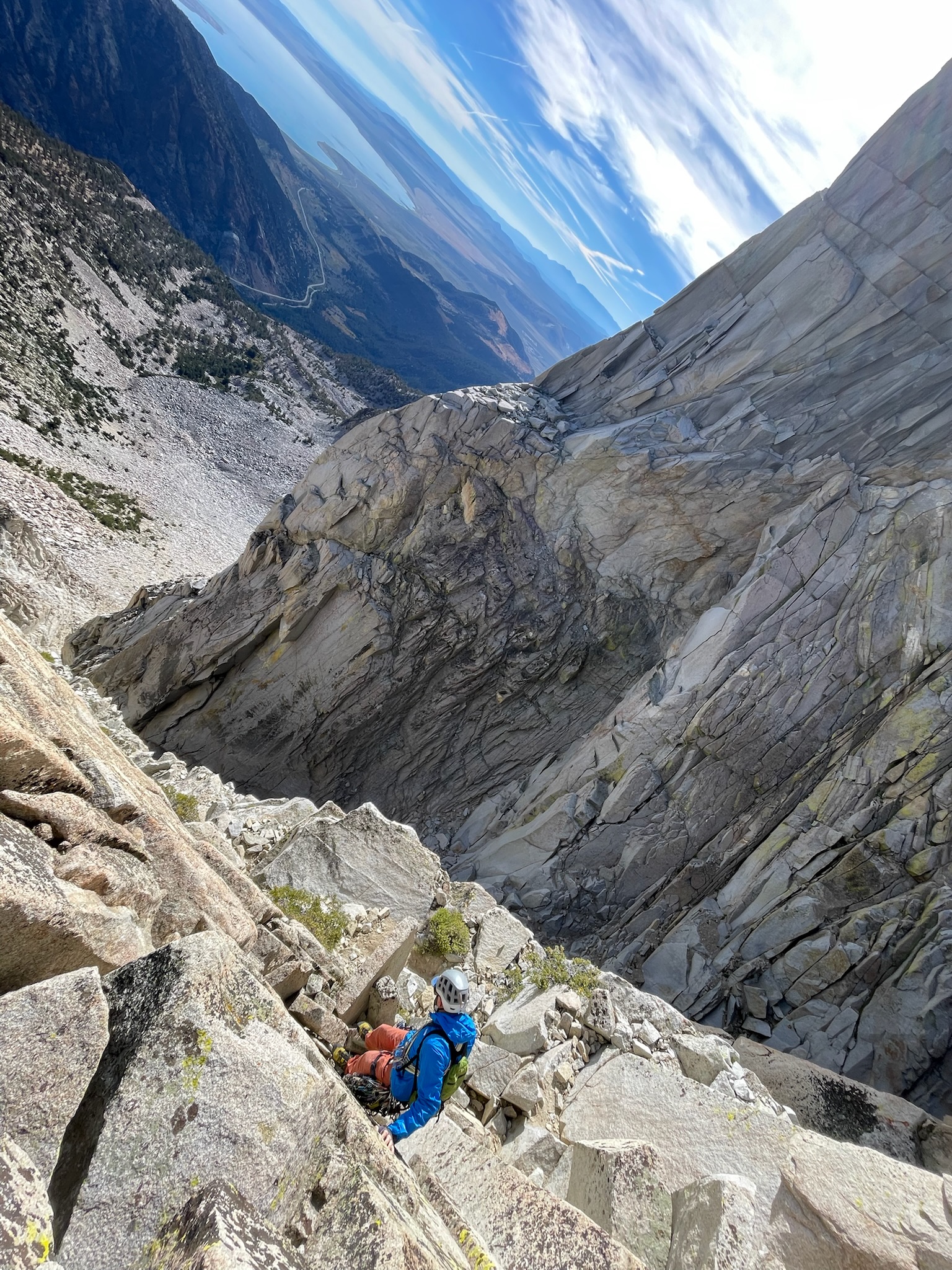
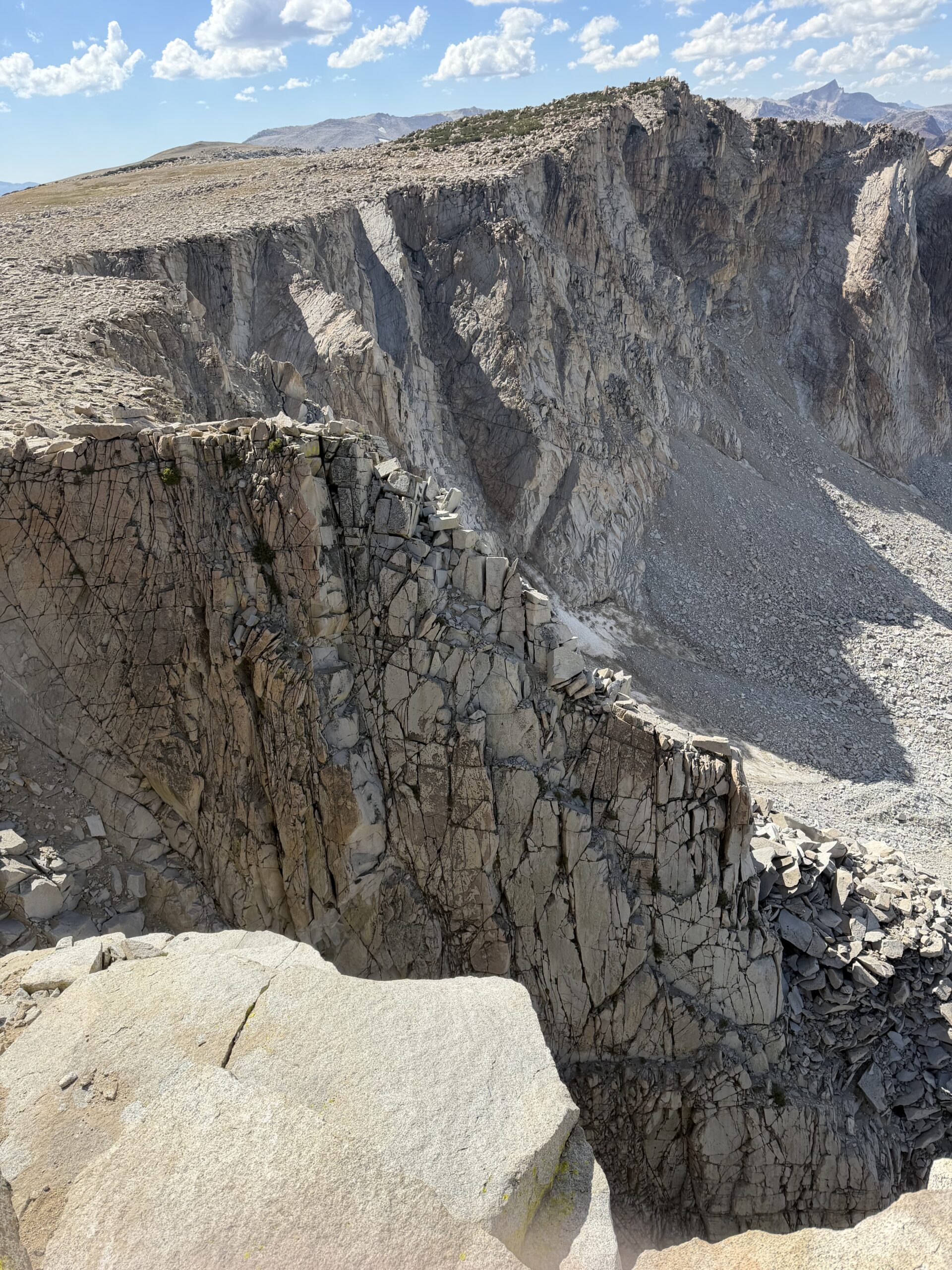
Both of us were surprised by the difficulty of the descent off the rim, with sustained third-class scrambling and multiple sections of loose rock. I was more than happy to have my climbing shoes on already. The ridgeline eventually widened as we neared the base, dropping off down a broad, low-angled face and across a loose scree gully to the climb. The descent took about 45 minutes from the rim of the plateau.
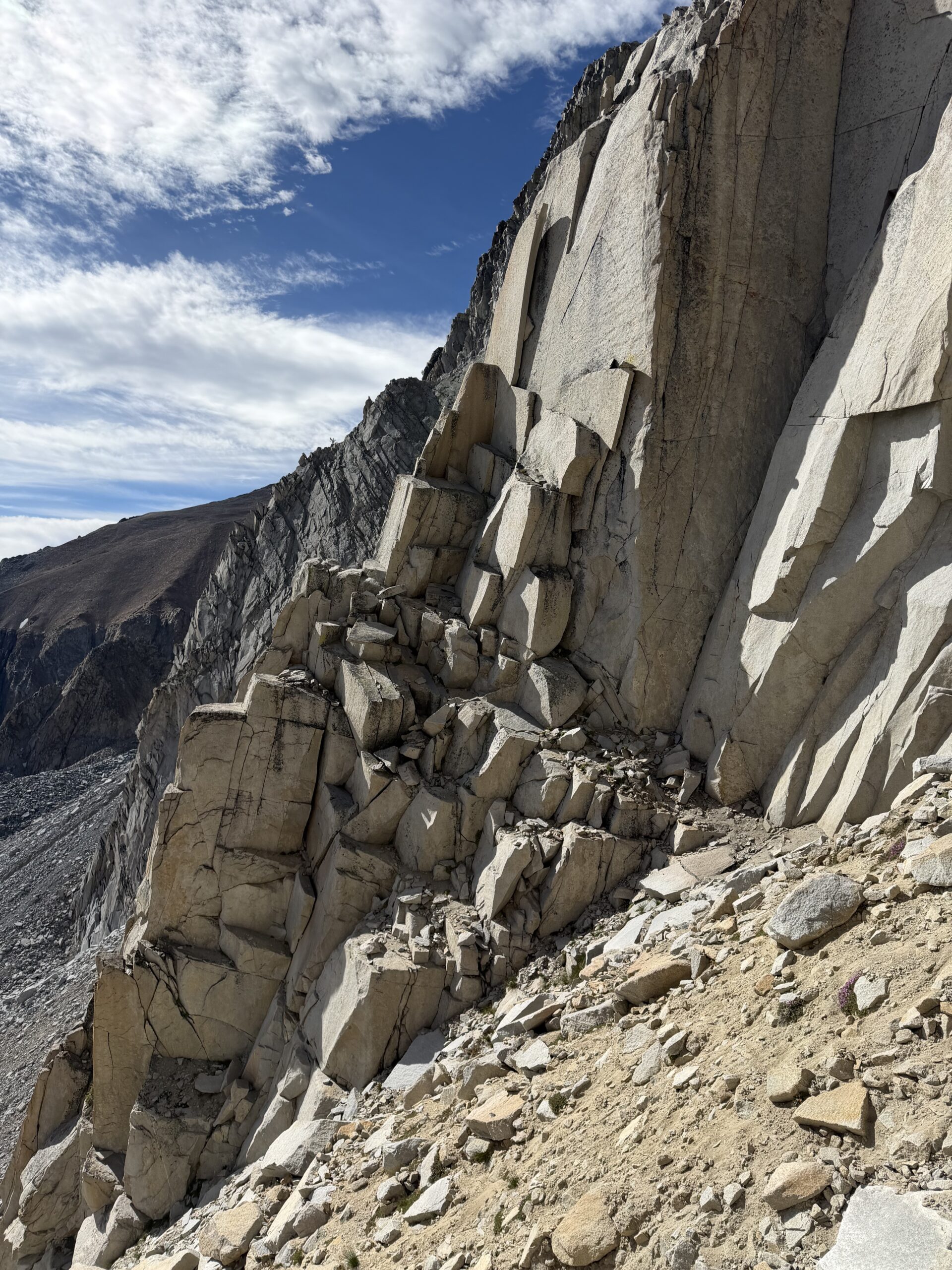
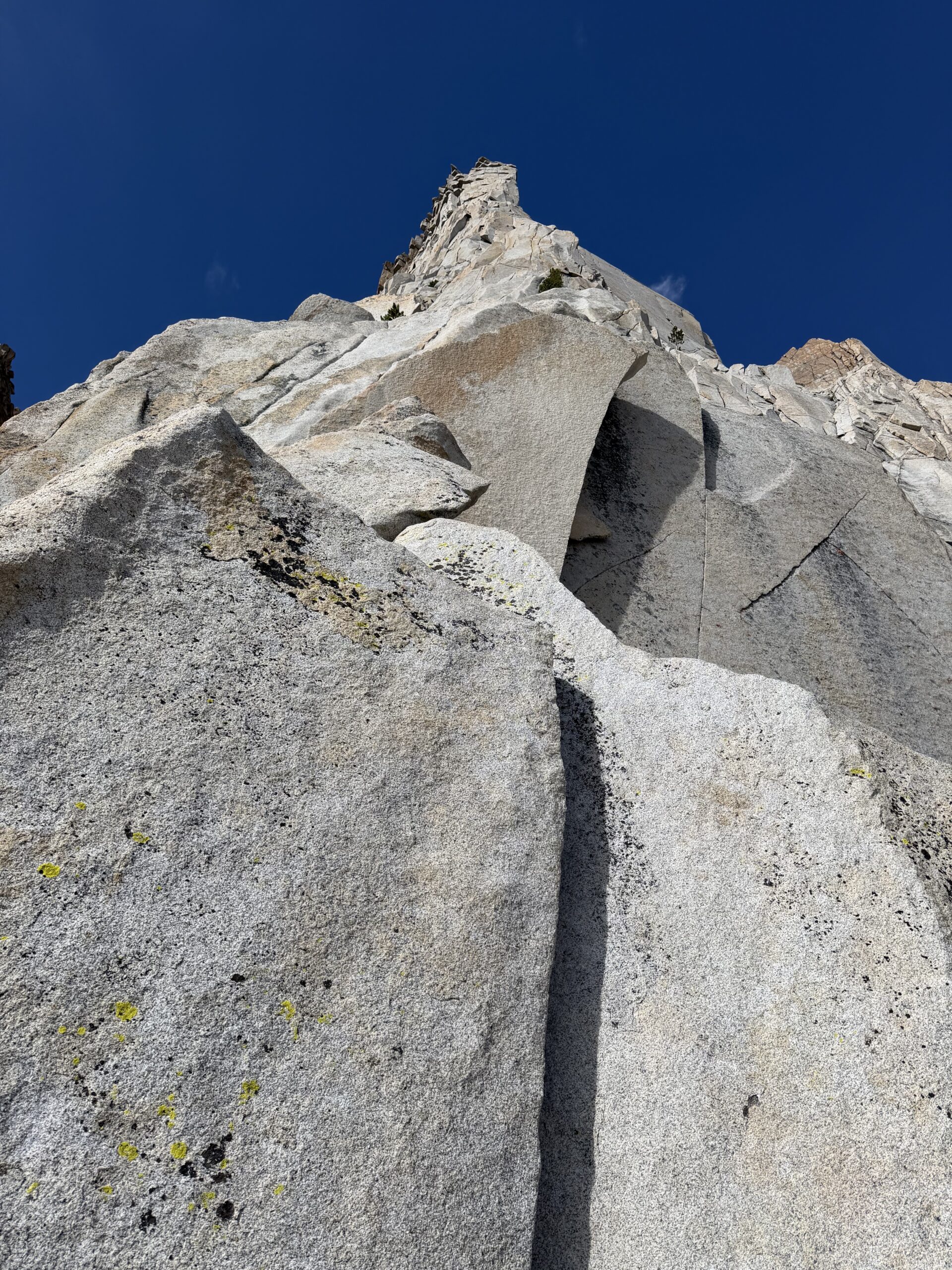
I scrambled up to the prow of the pillar to scout our line. The slightly easier standard start was a bit down and to the right. With our shoes and harnesses already on, we paused just long enough to flake the rope and distribute gear before Jesse started up on lead. After a short step he passed out of sight, working around to the left side of the prow along the side of an enormous detached flake. Rated 5.9, this section proved challenging on lead, bordering on off-width and protected by a tipped-out #4. Once Jesse was over the section, the difficulty quickly decreased to easy third class, and he scrambled up and right to a two-bolt anchor near a small pine tree.
I left the base of the climb to join him, having an easier time on the off-width with the benefit of a top rope and some hidden features on the left that allowed me to climb the flake without relying on wide technique. I met him at the belay, and after consulting the topo, we realized we were one crack system too far to the right. I set off on a short, almost completely horizontal traverse to the left, finding the correct pine tree—complete with a bail anchor—and the start of the second pitch.
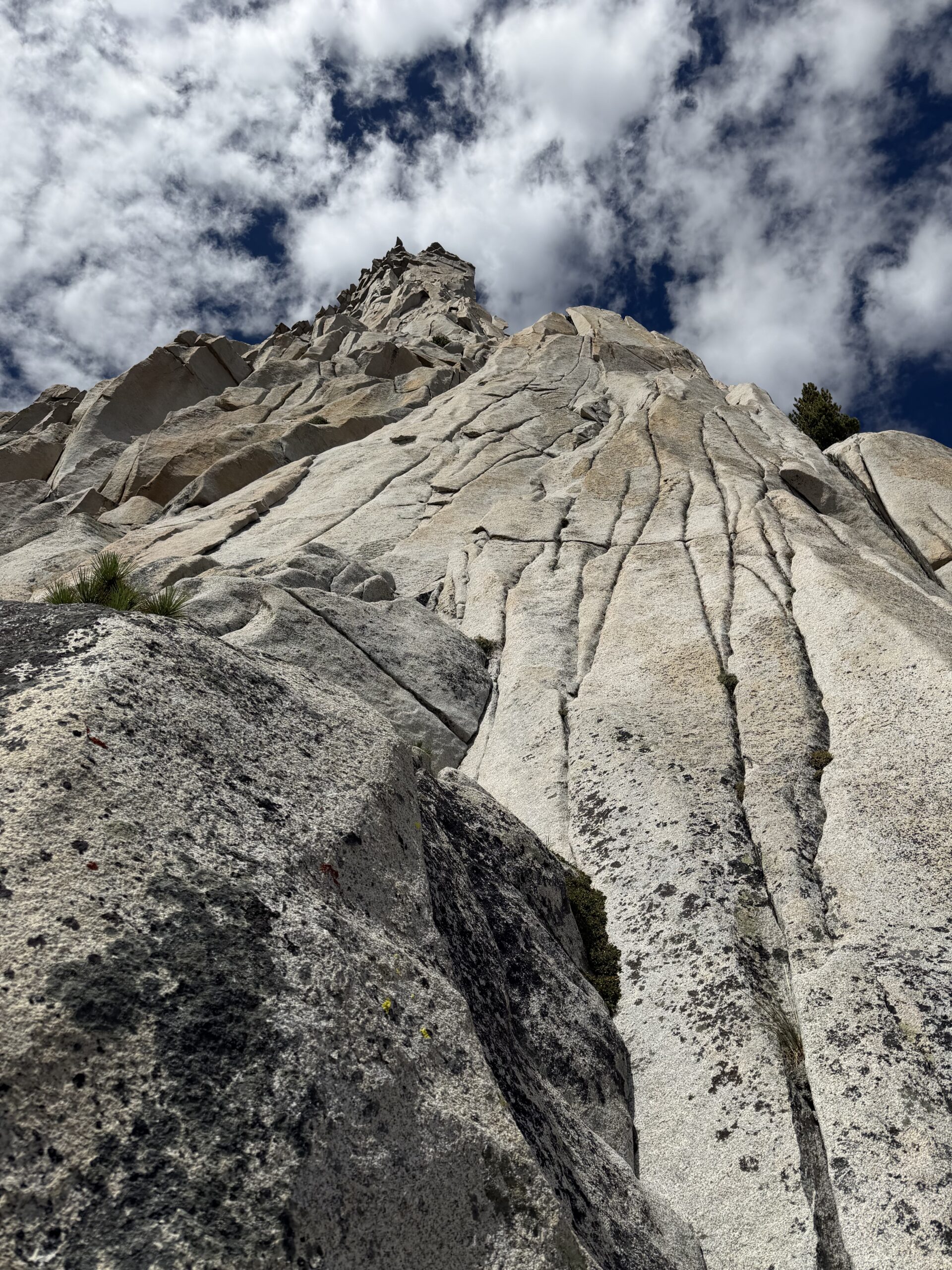
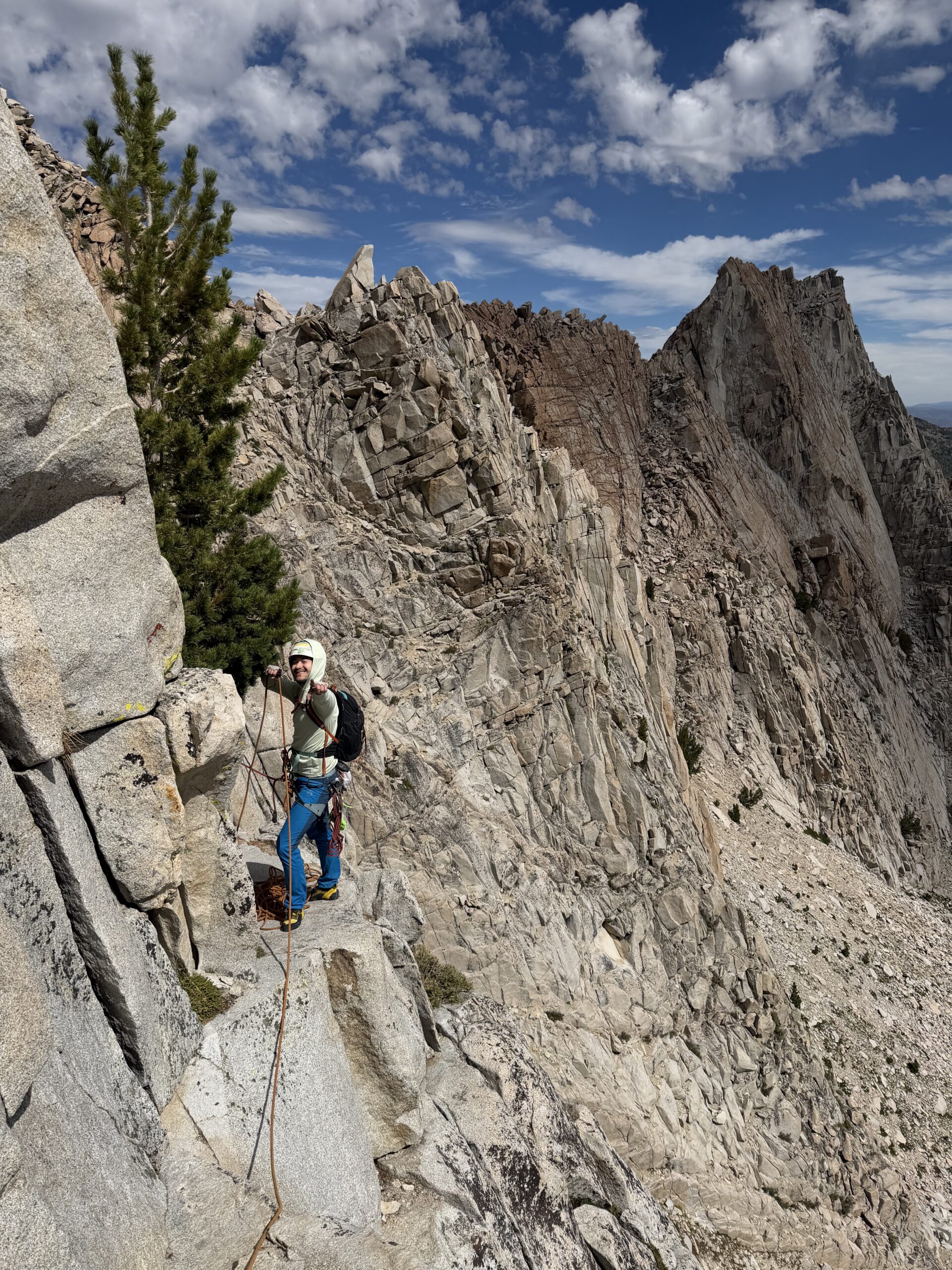
Pitch two would be our first real taste of 5.10 and the most sustained pitch of the route. It started easily enough, with a short section of 5.7 leading into a very fun dual crack system. The crack steepened and the right-hand crack disappeared, leaving the first crux directly above. I plugged in a few small cams before starting up, finding a few tenuous rests on features to the right where I could place additional gear. I was one move below the top of the crux sequence when I blew a foot, taking a short trad fall above my last piece.
I was disappointed to blow the onsight, particularly because I hadn’t felt like I was going to fall when my foot popped. I rested for a beat, then restarted, quickly getting past the spot where I had fallen and into an easier but more physical 5.7 off-width. After some serious grunting, I moved left into an alcove and built a belay to bring up Jesse.
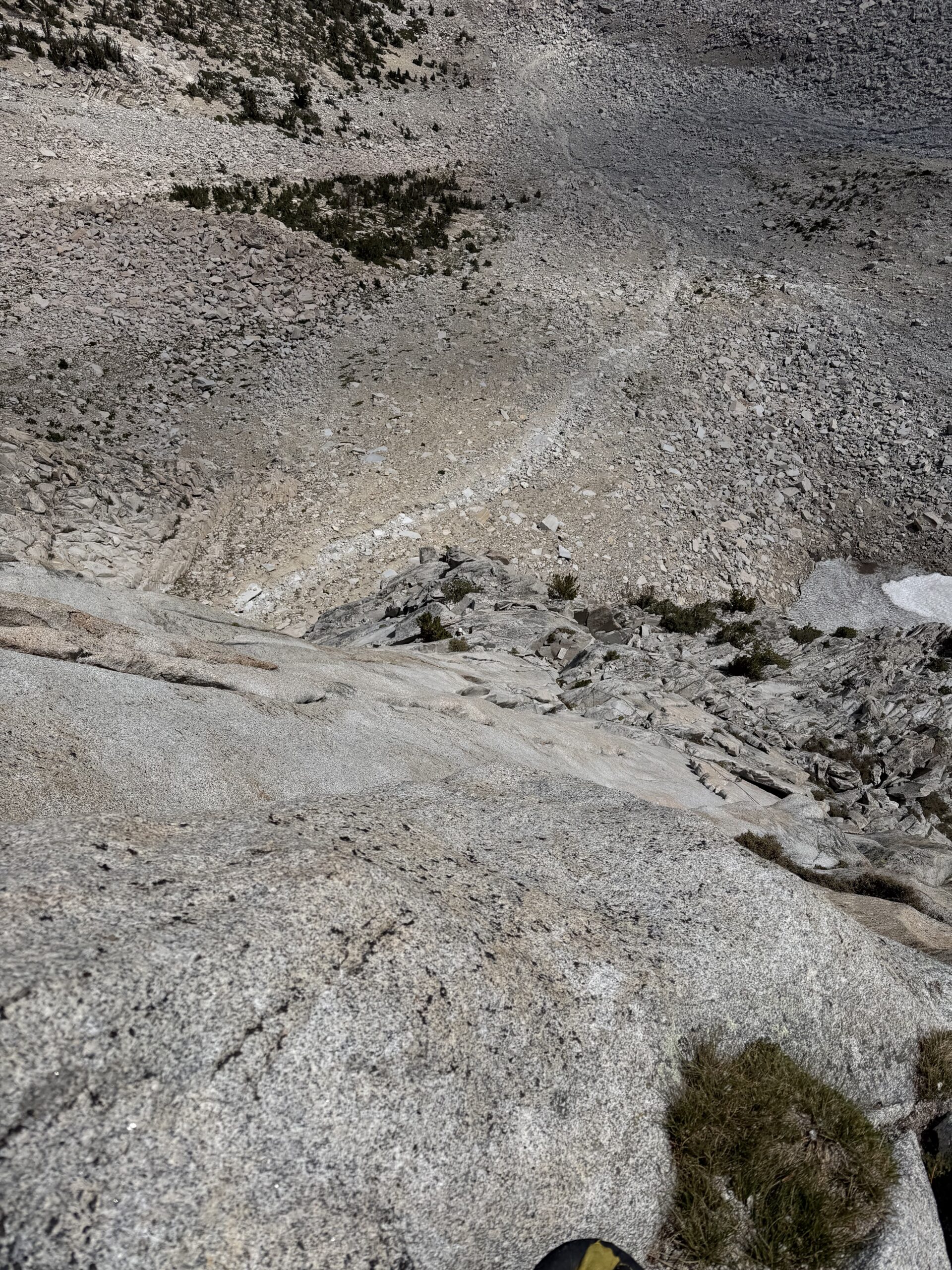
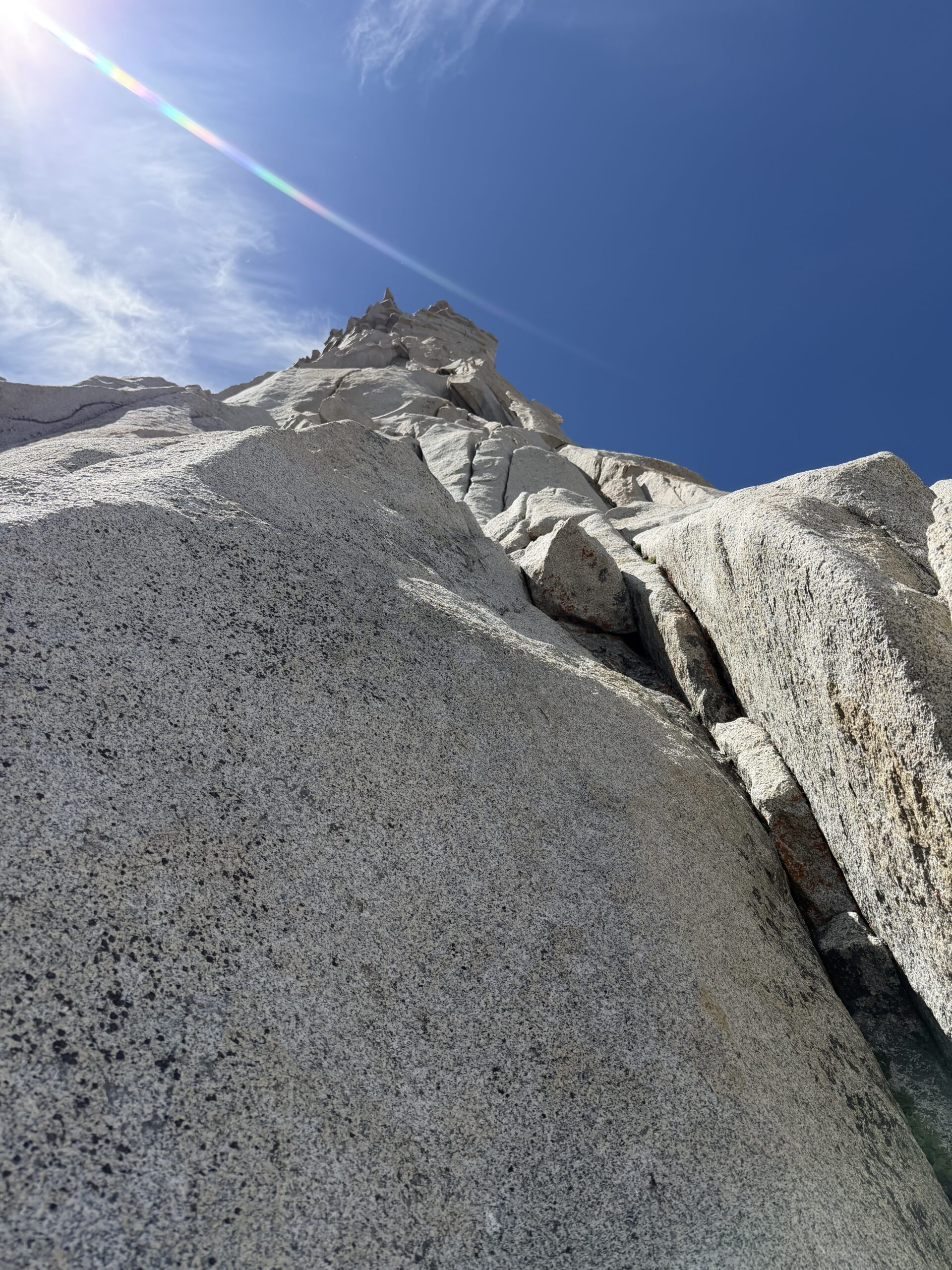
Like me, Jesse cruised the lower half of the pitch before falling at the exact same spot. The fall seemed to shake his confidence a bit more. Luckily for both of us, the third pitch was rated the easiest of the route at 5.8.
Unfortunately, the topo was a little confusing, and Jesse climbed out of the alcove to the left of the belay into some dirty 5.9 off-route cracks. He worked back right into the correct crack system, but quickly developed horrible rope drag and built an intermediate belay halfway up the pitch, just below the “5.8 pillar bear-hug” described in the topo. I gave him back some gear and he continued up, bear-hugging the pillar as advertised before reaching a short chimney formed by a massive detached flake and the main pillar. He built a wild belay at the top of the chimney and brought me up to join him.
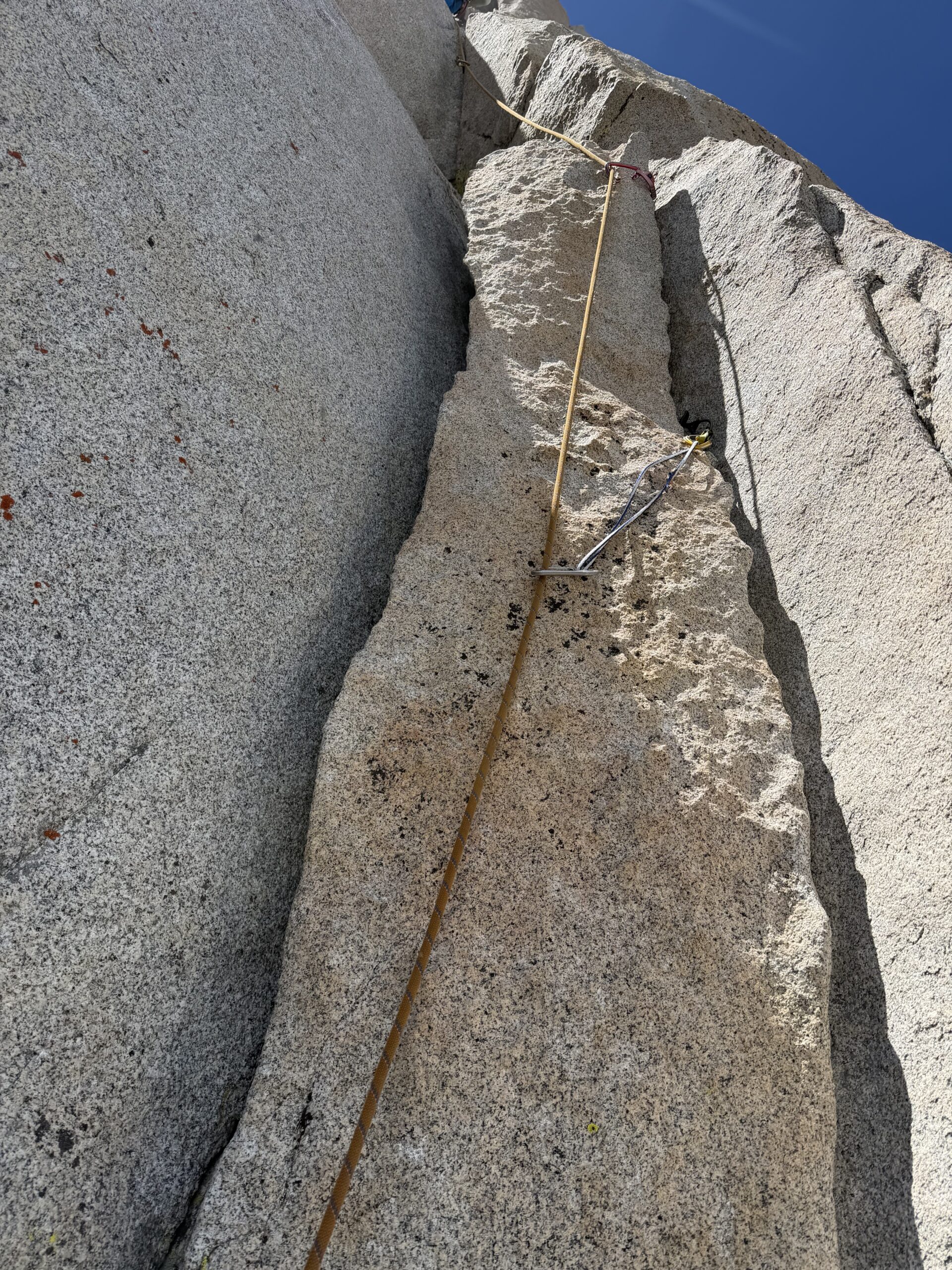
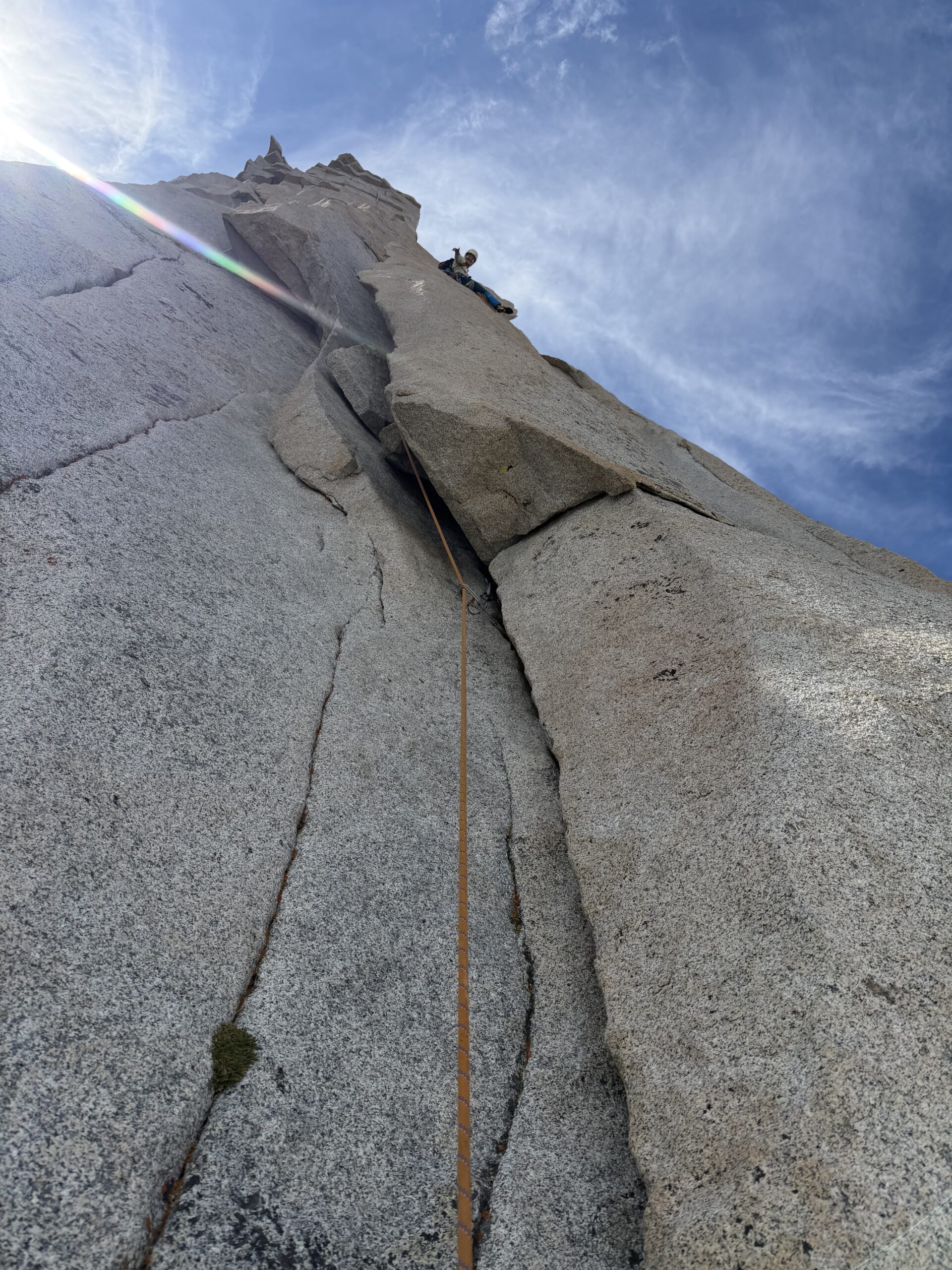
We were now just two pitches from the top, both rated 5.10b, with one lead each. It was my turn on the sharp end.
I started up from the belay, with the first section of 5.10a directly above along the left side of a flake jutting out from the rock. I placed a cam at the base and made a balancy move onto a rail to the left, allowing me to place two more pieces halfway up the flake.
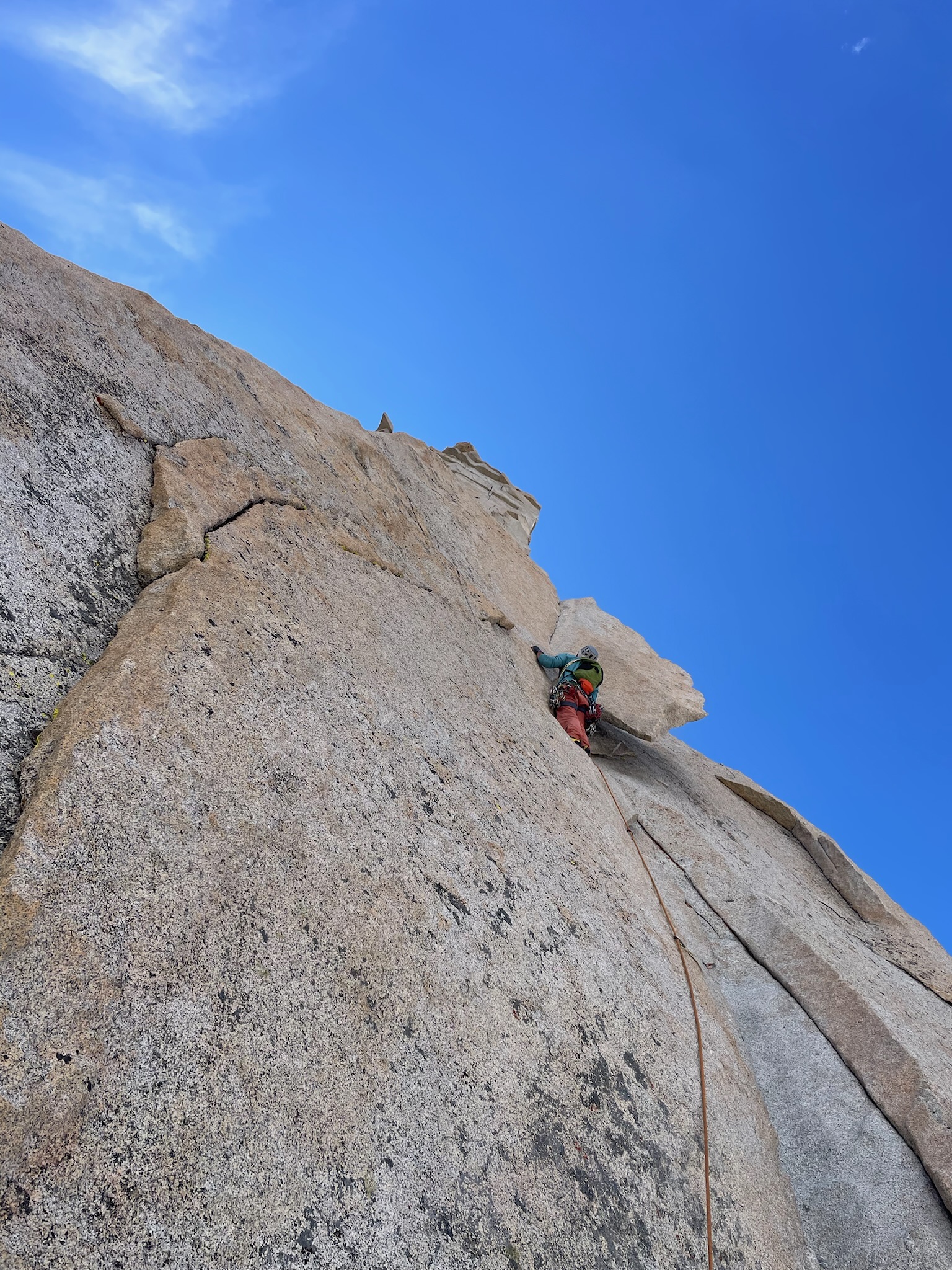
I yelled down to Jesse that I was going for it, then liebacked up the short crux and quickly found myself standing on top of the flake. I gave a holler of excitement, then looked up. The next crux was directly above.
I almost didn’t recognize it, the rock ahead looking easier than its 5.10a/b rating suggested. The greatest challenge was the protection. Once protected by a piton, the fourth-pitch crux was now protected by tiny nuts and cams scattered across the face. I placed a 0.1 Z4 in a slot at chest height. Stepping up onto a rail, I could get a 0.3 Z4 in the slot to the left and a 0.4 in a pod overhead, although a 0.5 would have been better.
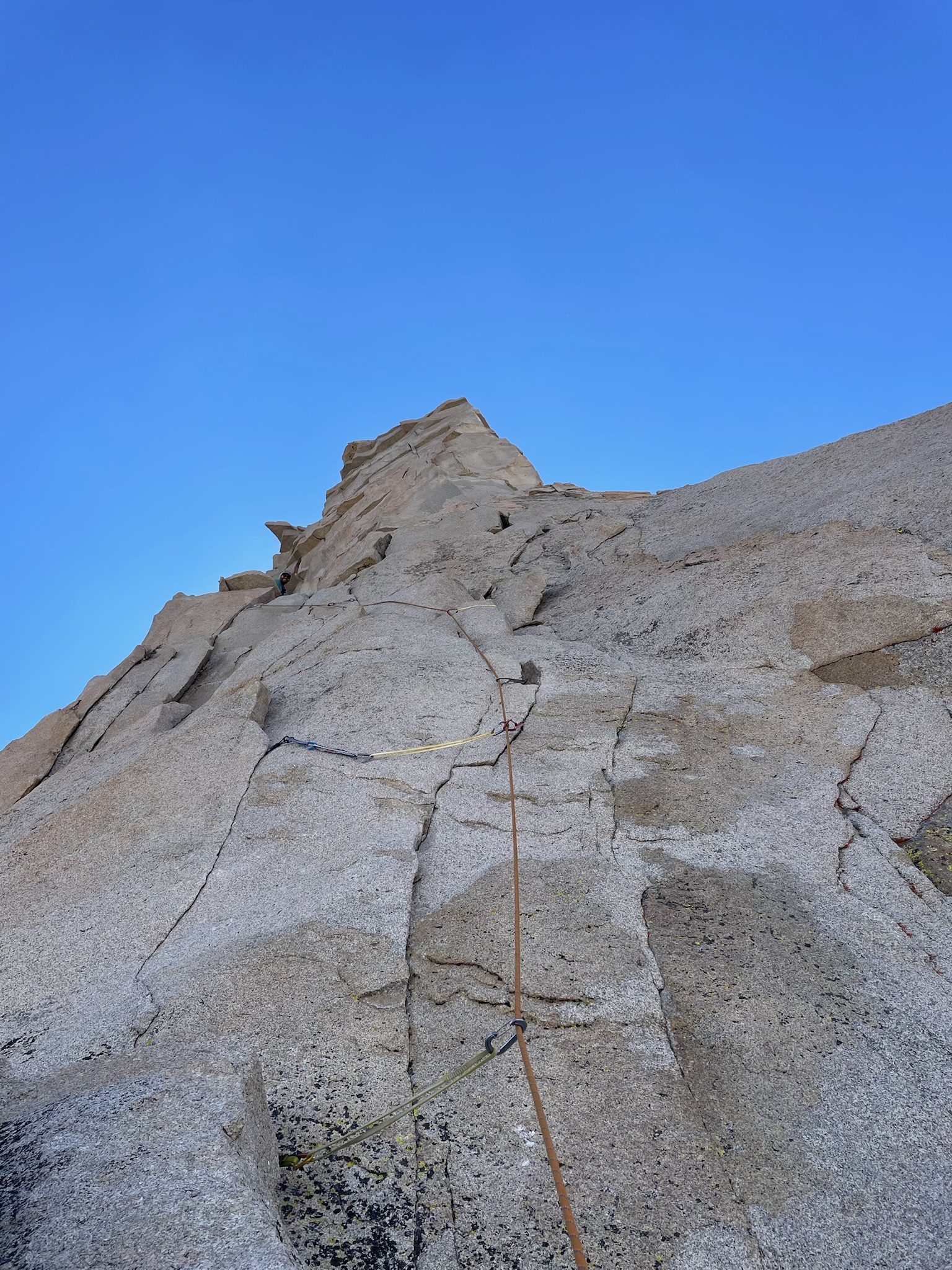
With the crux now about as well protected as I could make it, I committed to the sequence and pulled onto the ledge above.
“Easy peezy!” I yelled down to Jesse, smiling ear to ear. For the first time since my fall on pitch two, I felt like the pressure had lifted. My two assigned 5.10 leads were behind me, and I could finally watch Jesse tackle his. There was a final dual crack system on the pitch, rated 5.6 in the topo but feeling considerably harder and fairly heads-up, taking the few small cams I had left. I built a belay at the base of the final pitch and brought Jesse up to join me, now less than 200 feet from the top.
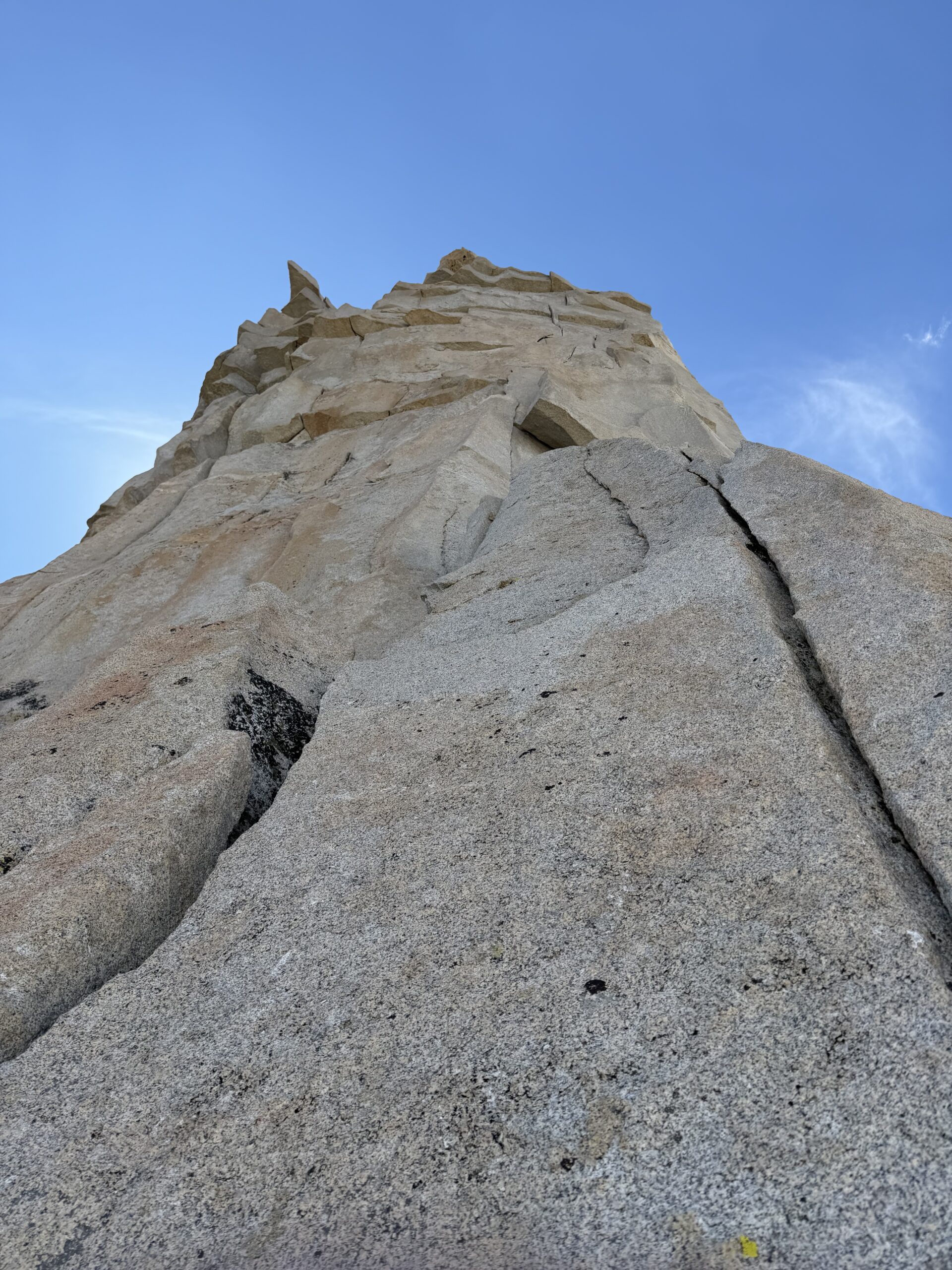
He climbed the fourth pitch easily, but was clearly a ball of nerves when he reached the belay.
“I might need you to lead the last pitch,” he said. I could tell his confidence had taken a hit, both from the two pitches he had led and from the fall on the second pitch.
“I’m absolutely willing to lead the final pitch, but I think you’ll be disappointed in yourself if you don’t at least try. There are plenty of ledges to build a belay. If you hit a point where you want to quit, bring me up and I’ll finish it off.” The safety valve seemed to give him a bit more confidence. After a short rest, he started up the final pitch.
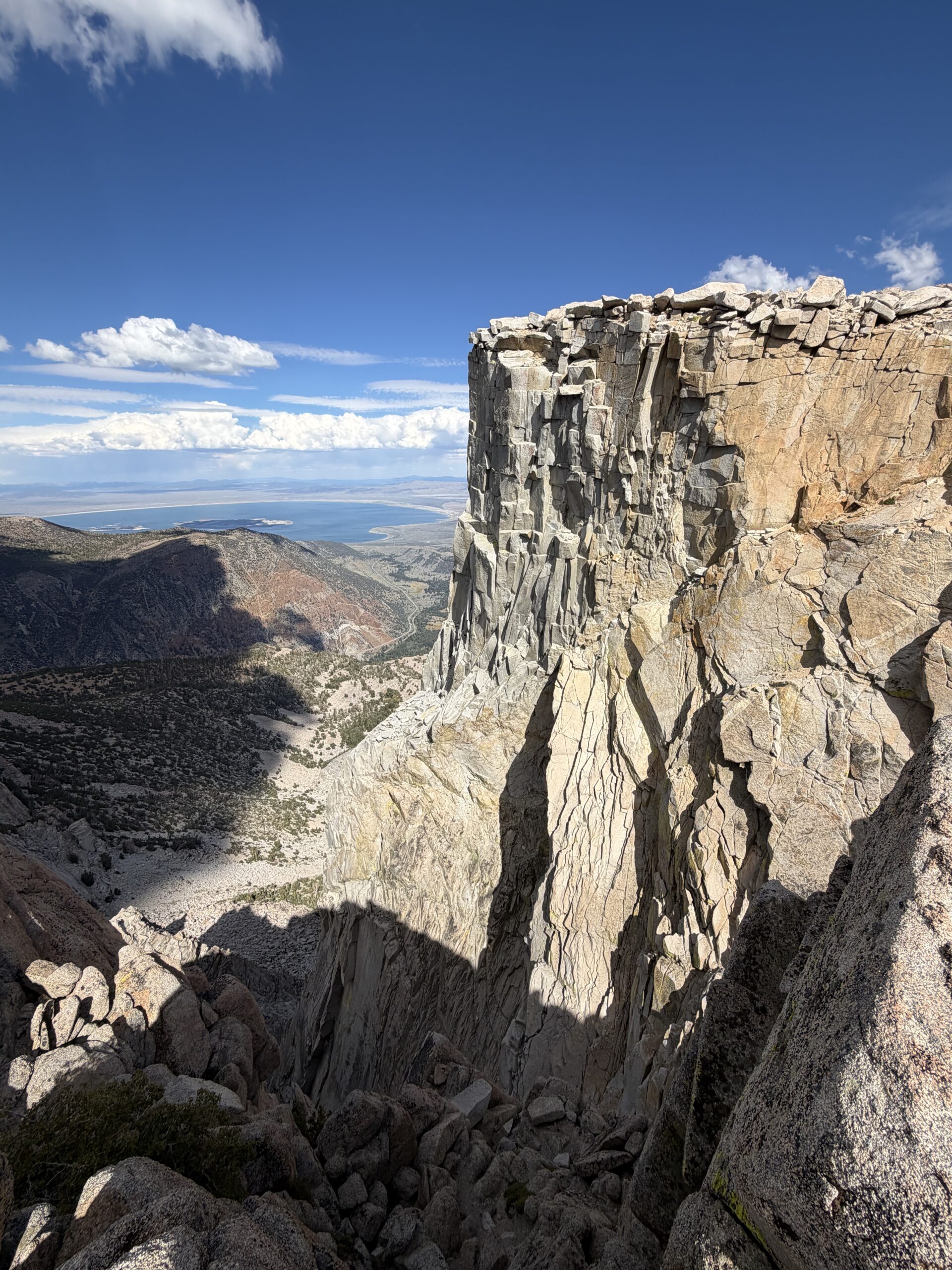
The last pitch of climbing is largely considered the best pitch of the entire route. Peter Croft famously called it “the greatest pitch of 5.9 in the universe.” Always one to sandbag, the pitch is now rated 5.10b by general consensus, with two distinct cruxes.
The first involves working around a short roof with a small finger crack. Jesse avoided this entirely by taking the 5.9 R-rated flake variation to the left, although the gear seemed better than the R rating would suggest. Just above was the final section of 5.10, a short ten-foot finger crack requiring a powerful lieback with high feet. Jesse was able to get in a small cam and nut at shoulder height, enough protection to give him the confidence to make the move.
He moved through it smoothly.
Now it was his turn to yell in excitement, having led through the hardest section of the route.
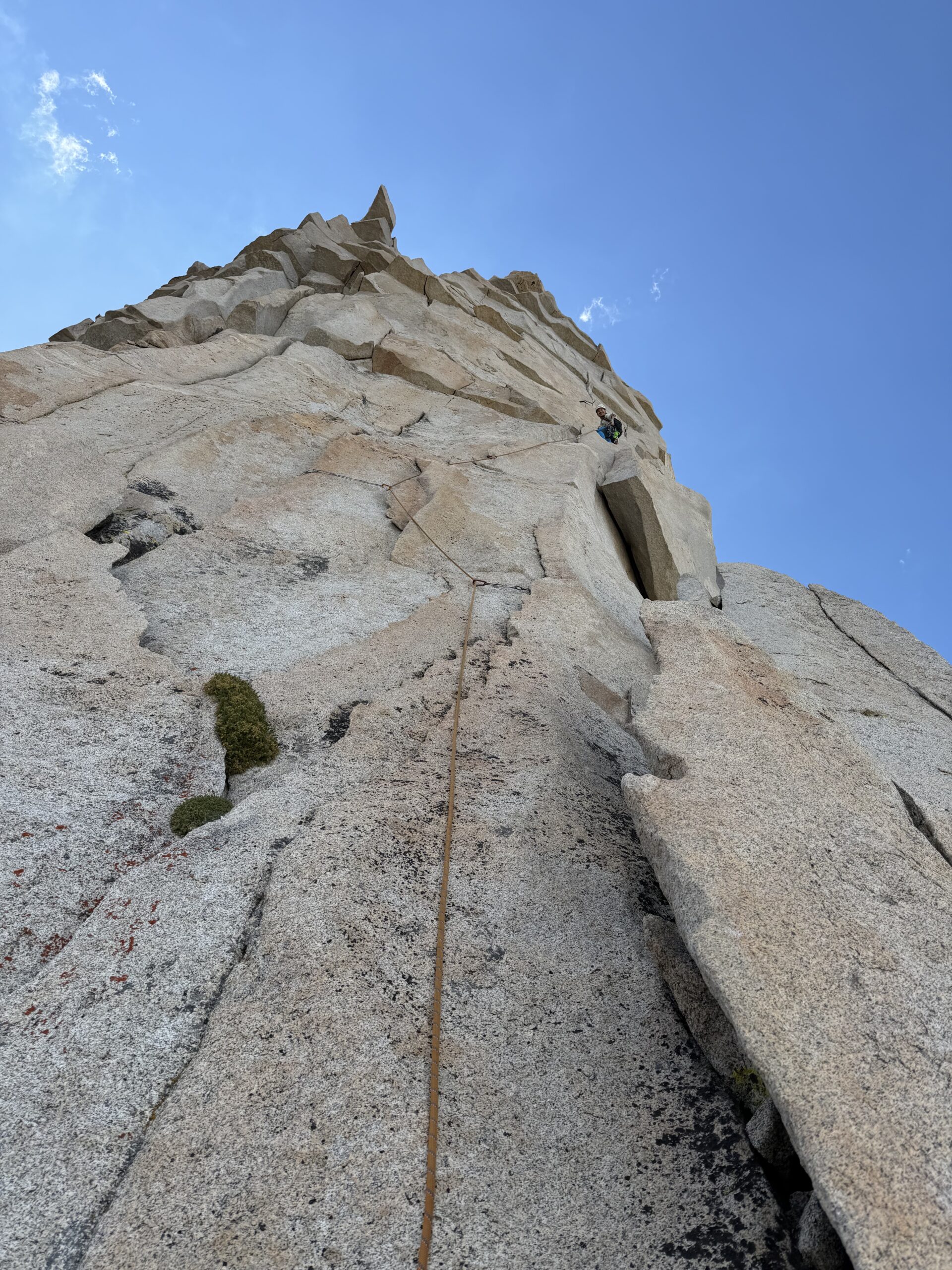
A nice rest on the ledge above gave him a moment to recover before the final headwall. Rated 5.9 and slightly overhanging, it featured chokestones stuck in the final hand crack, turning them into perfect hero jugs. The crack led toward the short roof guarding the summit, with a wild traverse and mantle to the right to finish the route.
As Jesse topped out, he screamed with excitement.
And kept screaming.
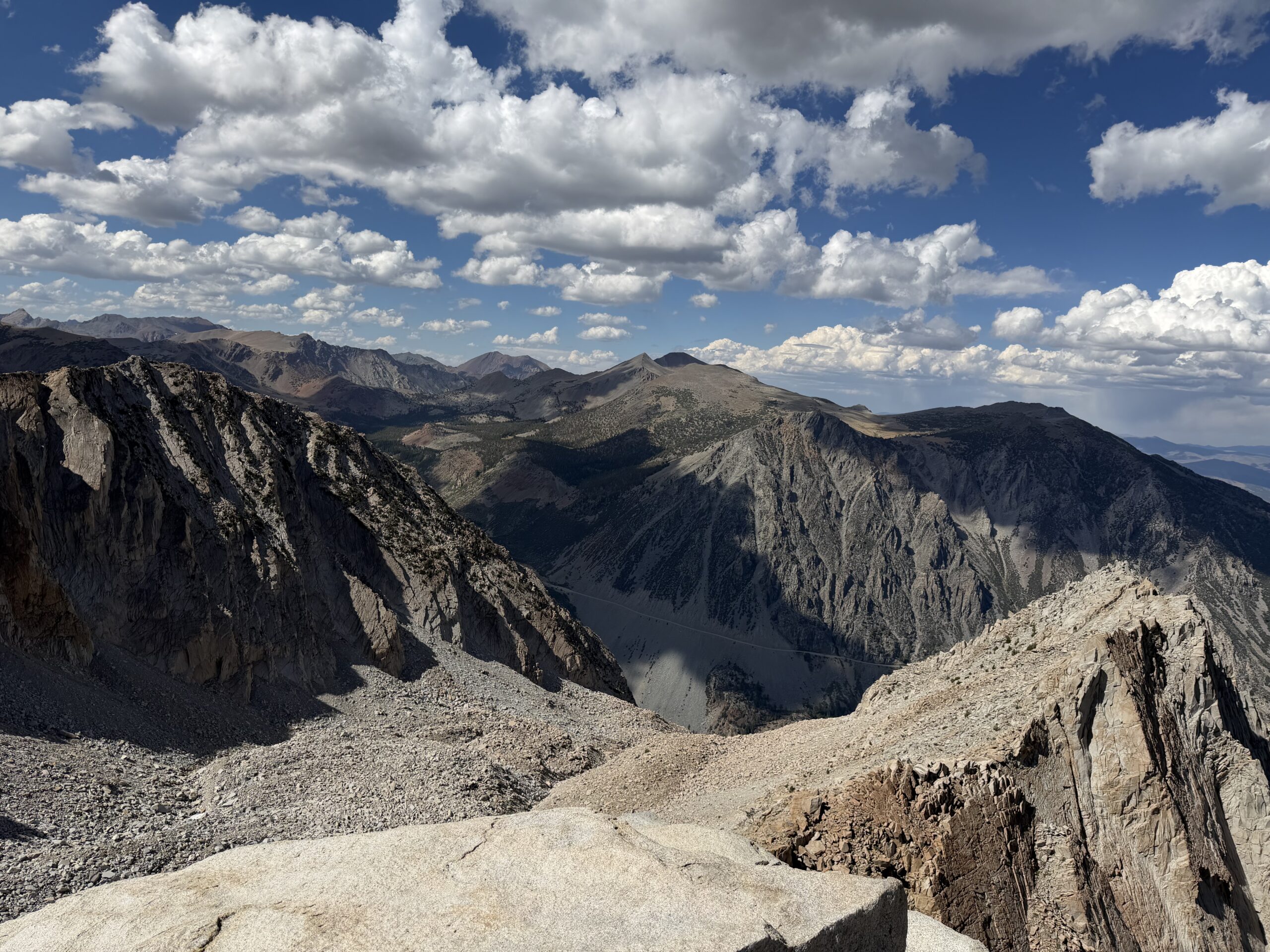
For at least 90 seconds, his delight echoed down the canyon toward Lee Vining.
Another team of local climbers from Tuolumne, Chris and Jaymo, had caught up to us at the final belay, and the three of us laughed at Jesse’s celebration. After a few moments of silence, his face popped over the roof from the summit.
“On belay!” he yelled to me, smiling ear to ear.
I started up the pitch, getting through the 5.9 flakes quickly before reaching the final 5.10b section. I cleaned the gear and had to reset my feet after my initial attempt, finding it the hardest 5.10 section of the route.
The final 30 feet were as glorious as advertised, with an excellent hand crack and blocks leading to the final wild mantle onto the summit.
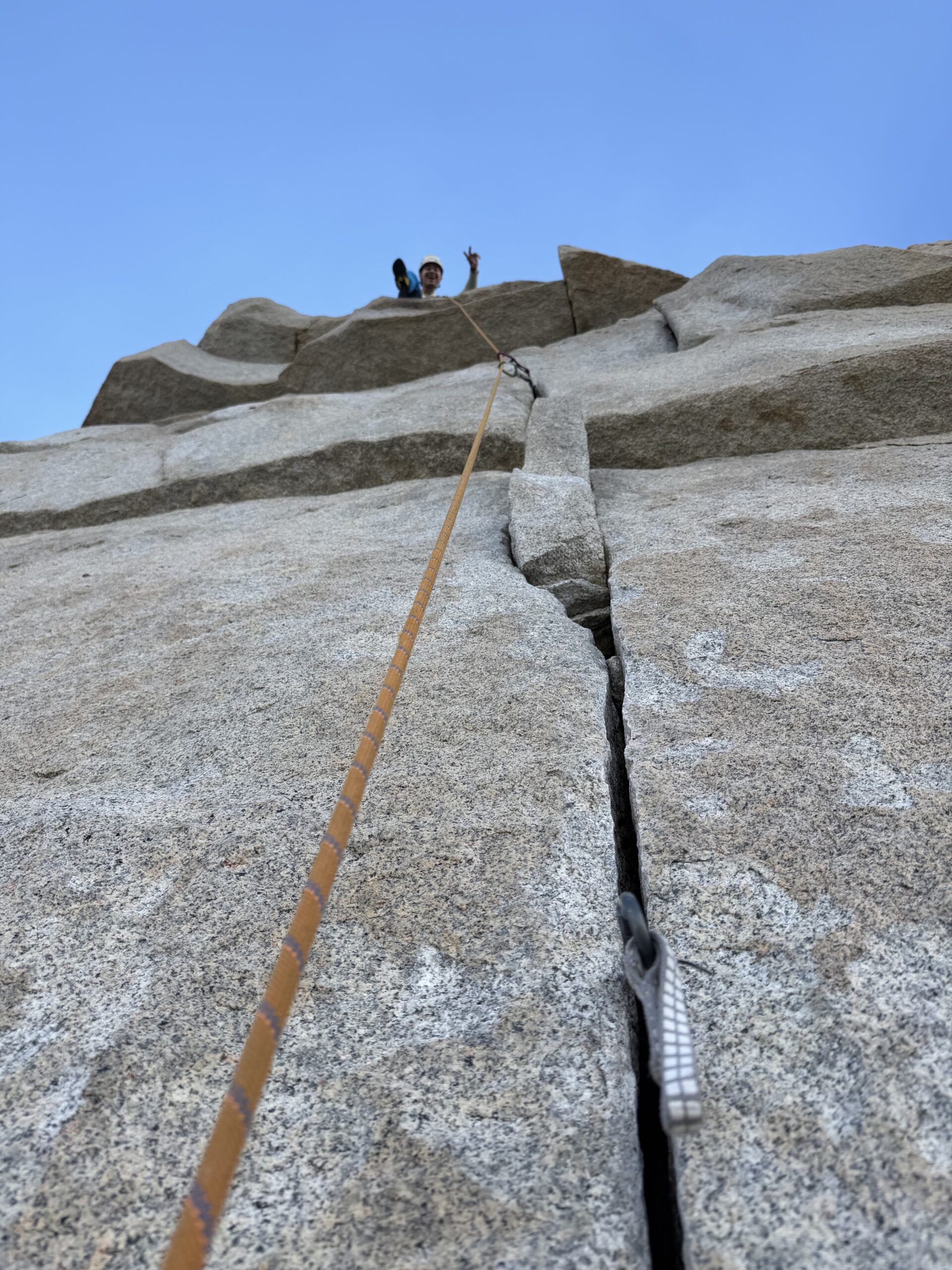
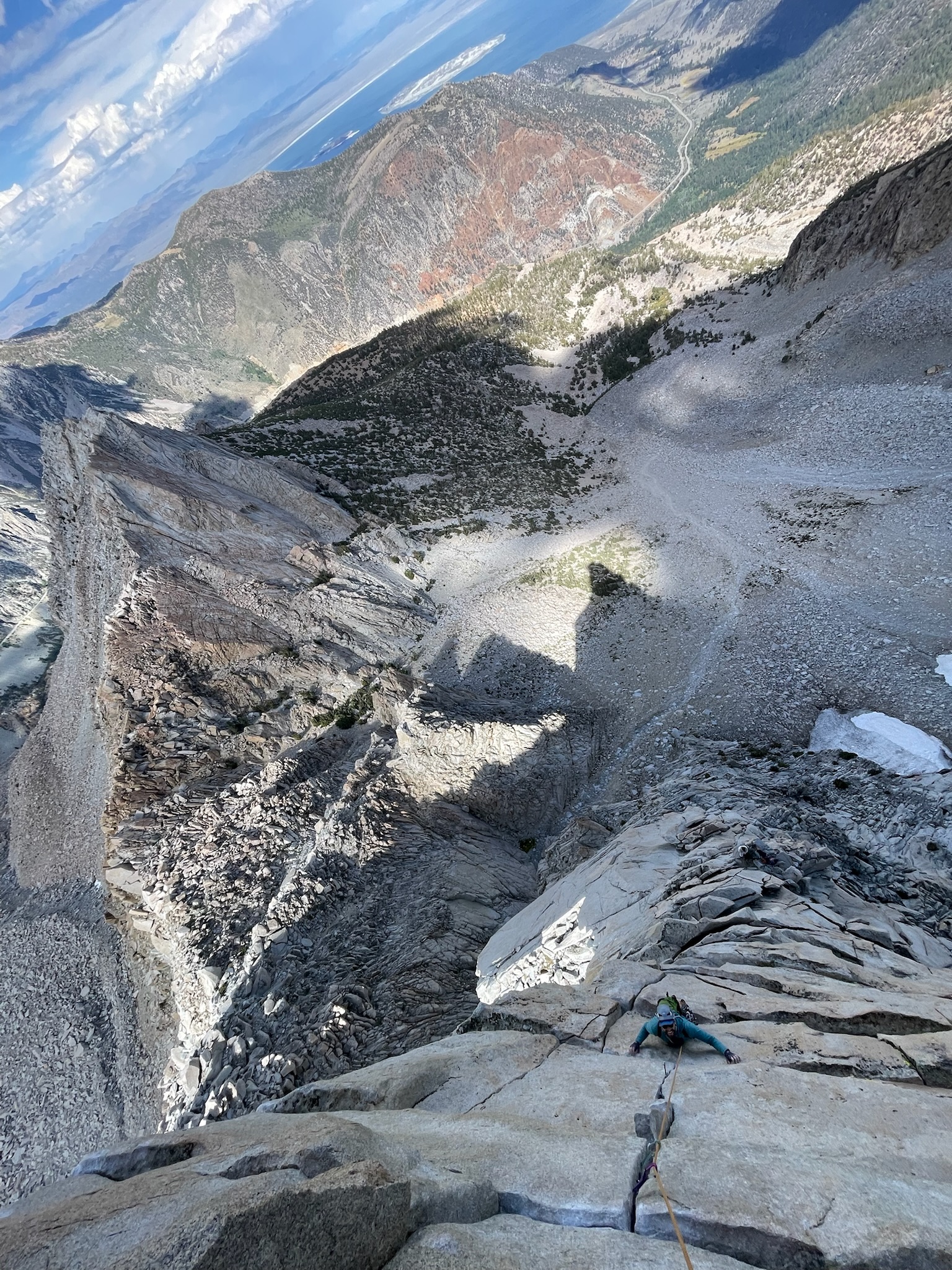
Jesse and I hugged at the belay before scrambling to the summit boulder. We both quickly agreed that the route belonged in our top five routes of all time.
As I flaked the rope, Jesse scrambled back to our packs, snagging a photo of me at the summit with fluffy clouds hanging over the Eastern Sierra. I scrambled down to join him, putting on my now-dry approach shoes and socks for the hike out.
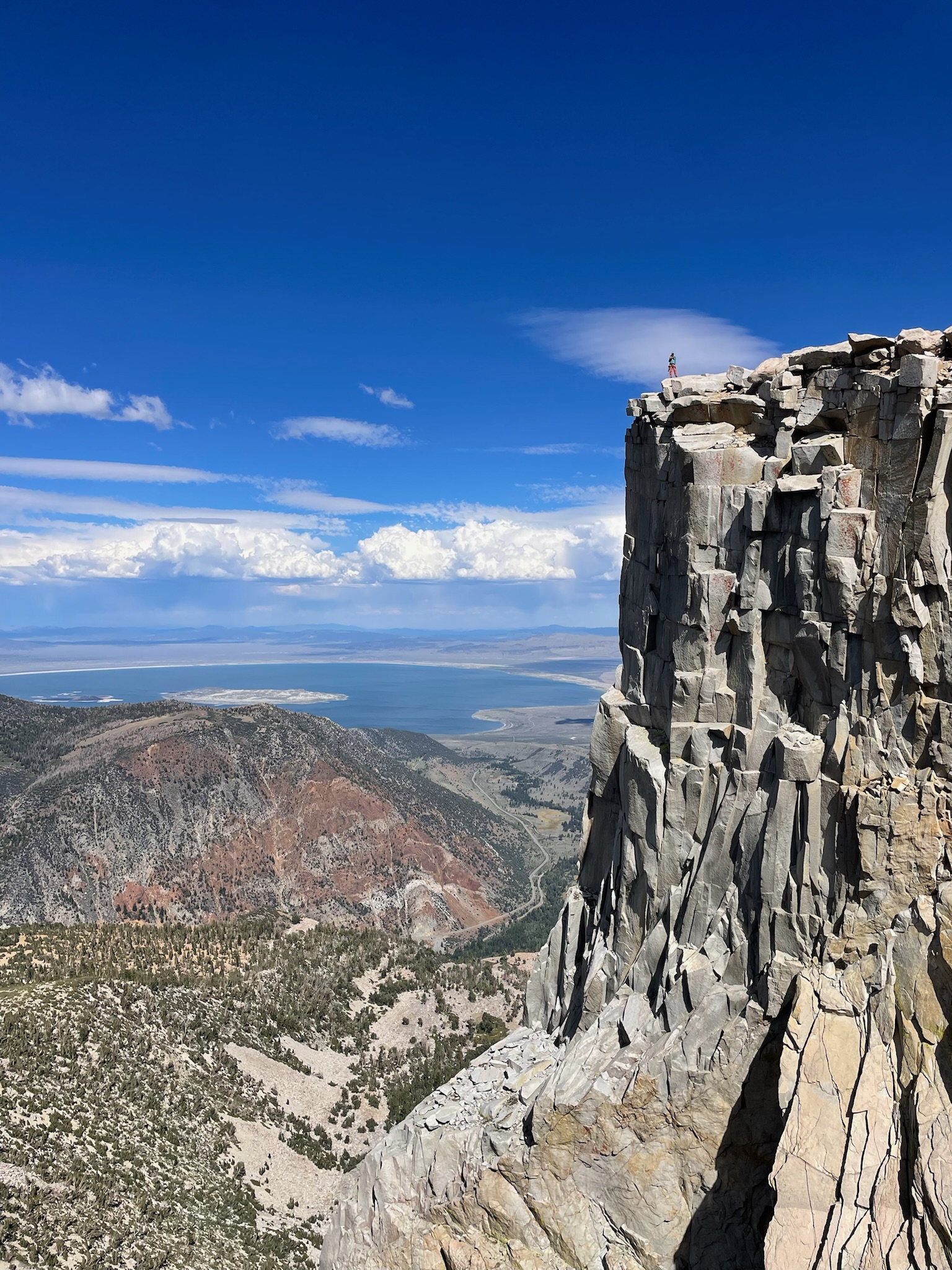
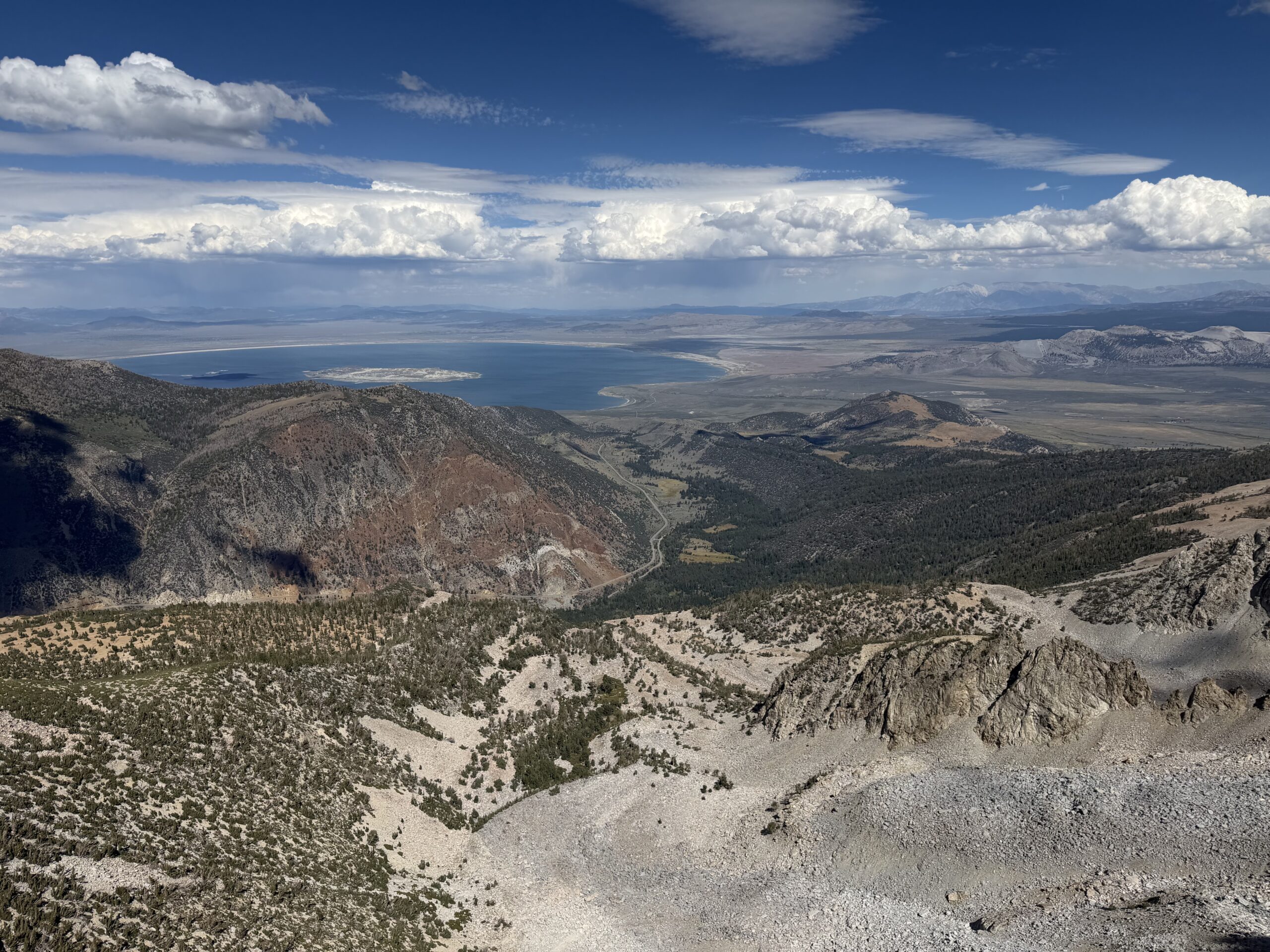
Emboldened by our 5.10 trad leads, we were soon discussing even bigger objectives—Sun Ribbon Arete on Temple Crag, the Southeast Face of Clyde Minaret, and the Red Dihedral on the Incredible Hulk. There certainly is no end to the quality alpine climbing in the Sierra.
It was shortly after 5 PM when we made it back to the trailhead, enough time for me to grab a pizza on the way home for the family in Mammoth. We said our goodbyes and I headed east, stealing glances at the Third Pillar as I drove down the canyon toward Lee Vining.
Incredible achievement! Thank you for sharing!
Loved it , really enjoyed following your adventure . Look forward to hearing about future endeavours !